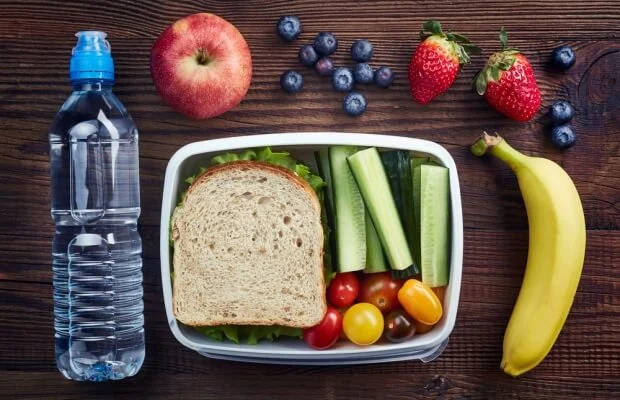
I used to decide what to eat three times a day, every day. Each decision felt small, but the cumulative cost was enormous. By 6 p.m., after eight hours of work-related decisions, I had no mental energy left for dinner choices. So I ordered takeout. Or I stared into my refrigerator until something easy won. That something was rarely healthy.
The problem was not that I lacked healthy recipes. It was that healthy eating required too many decisions at the exact moment my willpower was depleted. Every time I opened my pantry, I was negotiating with myself. Should I cook the salmon or make pasta? Should I chop vegetables or order pizza? These negotiations almost always ended the same way.
What changed was not my motivation. It was my environment. I redesigned my kitchen so that the default choice was the healthy choice. I removed the need for willpower by removing the need for choice. This is exactly what I keep in my kitchen and why each item makes healthy eating automatic rather than effortful.
The Principle: Default Options Beat Good Intentions
Behavioral economists call this “choice architecture.” The idea is simple: people tend to choose whatever is easiest, most visible, and most immediately available. If the healthy option is the easy option, you will choose it without thinking. If the unhealthy option is the easy option, you will choose that instead.
Research from Cornell University’s Food and Brand Lab found that people eat what they see. When fruit was placed on the kitchen counter, participants ate significantly more of it. When cookies were placed in opaque containers, consumption dropped dramatically. The environment shapes behavior more than intentions do.
I applied this principle to every area of my kitchen. I made healthy foods impossible to miss and unhealthy foods difficult to access. The result was that I started eating better without trying harder.
The Visibility Rule
If you want to eat more of something, put it where your eyes land first. If you want to eat less of something, hide it, freeze it, or remove it entirely. Willpower is a limited resource. Design your environment so you rarely need to spend it.
What I Keep in My Refrigerator
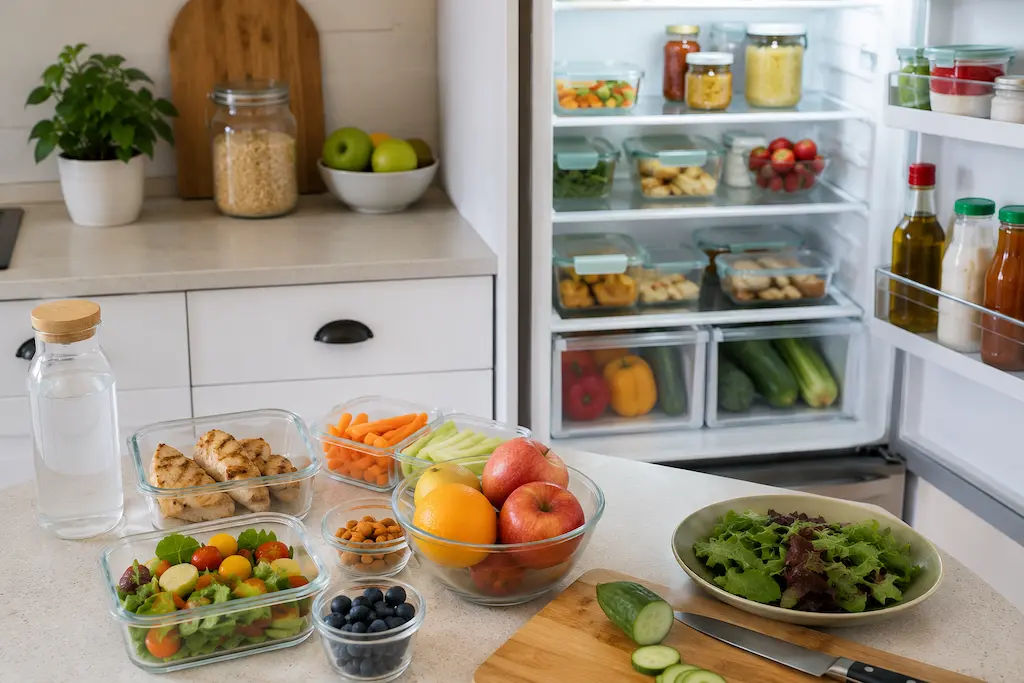
My refrigerator is organized into zones. Each zone serves a specific purpose, and nothing exists in the refrigerator without a reason.
| Zone | What Is There | Why It Works |
|---|---|---|
| Eye-level shelf | Pre-cut vegetables, washed berries, plain yogurt | First thing I see when I open the door. Requires zero preparation to eat. |
| Middle shelf | Cooked proteins: grilled chicken, hard-boiled eggs, baked tofu | Ready-to-eat protein eliminates the “what is for dinner” decision entirely. |
| Bottom drawer | Raw vegetables and proteins for cooking | Out of sight until I am ready to cook. Prevents impulse snacking on raw ingredients. |
| Door shelves | Condiments, hot sauce, mustard, olive oil | Flavor enhancers that make simple food interesting without adding complexity. |
| Not allowed | Sugary drinks, processed snacks, desserts | If it is not in the refrigerator, I cannot eat it impulsively. |
The pre-cut vegetables are the most important element. I spend thirty minutes every Sunday washing, chopping, and portioning vegetables into clear containers. This single investment eliminates the “I do not have time to prep vegetables” excuse for the entire week. When I am hungry, I grab cherry tomatoes, cucumber slices, or bell pepper strips without thinking.
What I Keep in My Pantry
My pantry follows the same principle: healthy defaults, visible and accessible. Unhealthy options are either absent or stored inconveniently.
| Category | Specific Items | How I Use Them |
|---|---|---|
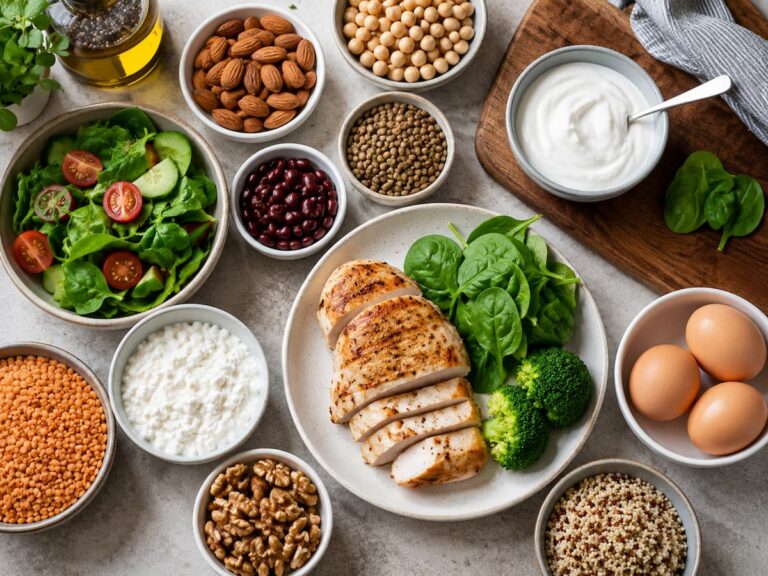
| Whole grains | Quinoa, brown rice, oats, whole grain pasta | Batch-cooked on Sunday. Base for quick lunches and dinners all week. |
| Legumes | Canned black beans, chickpeas, lentils | Rinsed and added to salads, grain bowls, or soups in under two minutes. |
| Nuts and seeds | Almonds, walnuts, pumpkin seeds, chia seeds | Portioned into small containers. Prevents mindless overeating from the bag. |
| Canned fish | Tuna, sardines, salmon | Emergency protein when fresh options run out. Mixed with mustard or olive oil. |
| Broth and tomatoes | Low-sodium vegetable broth, diced tomatoes | Base for fifteen-minute soups and stews. Combine with vegetables and protein. |
| Not allowed | Chips, crackers, cookies, candy, sugary cereals | These do not enter my house. If I want them, I must leave and buy a single serving. |
The nuts are worth explaining further. I used to buy large bags and eat them by the handful until the bag was empty. Now I portion them into small containers immediately upon bringing them home. Each container holds roughly 150 calories. When I want a snack, I grab one container. When it is empty, the decision is made for me. The friction of opening a second container is usually enough to stop me.
The Portion Friction Principle
The easiest way to eat less of something is to make getting more difficult. A large open bag requires zero effort to continue eating. A small closed container requires deliberate action to reopen. That small amount of friction is often the difference between one serving and three.
What I Keep on My Counter
Counter space is prime real estate. Whatever sits there becomes what I eat when I am not thinking. I use this deliberately.
Always visible: A bowl of fresh fruit. Currently apples and oranges. I eat two to three pieces daily without planning to, simply because they are the first thing I see when I enter the kitchen. When the bowl is empty, I refill it immediately.
Always visible: A water filter pitcher. I drink more water when it is already out and ready. The pitcher on the counter removes the “I should get a glass of water” decision entirely. I just pour.
Never visible: Bread, pastries, or any baked goods. These live in the freezer if they live in my house at all. The freezer adds a twenty-second delay that is usually enough for the impulse to pass.
Never visible: A knife block or utensil holder near the stove. I moved these to a drawer. The counter is for food, not tools. Clear counters make cooking feel easier. Cluttered counters make ordering takeout feel easier.
What I Keep in My Freezer
The freezer is my insurance policy against bad decisions. It contains meals and ingredients that prevent the “there is nothing to eat” excuse.
| Item | How I Prepare It | When I Use It |
|---|---|---|
| Frozen vegetables | Bought pre-frozen: broccoli, spinach, mixed peppers | When fresh vegetables run out. Steamed in five minutes. |
| Pre-portioned proteins | Chicken breasts, fish fillets, marinated tofu | Defrosted overnight for next-day cooking. No last-minute store run. |
| Homemade soup | Made in large batches, frozen in single portions | Emergency dinner when I am too tired to cook. Microwaved in minutes. |
| Whole grain bread | Stored in the freezer, not the counter | Toast for breakfast. The freezer prevents me from eating half a loaf in one sitting. |
The homemade soup is the most valuable element. Every two weeks, I make a large pot of vegetable soup with beans, lentils, and whatever vegetables are about to spoil. I freeze it in individual containers. When I am exhausted and tempted to order food, I microwave a container instead. It is not exciting. But it is nourishing, and it prevents the worse choice.
The Weekly Reset Ritual
This system does not maintain itself. I spend ninety minutes every Sunday resetting my kitchen for the week ahead. This ritual is non-negotiable.
Thirty minutes: Wash, chop, and portion all vegetables. Fill clear containers and place them on the eye-level refrigerator shelf.
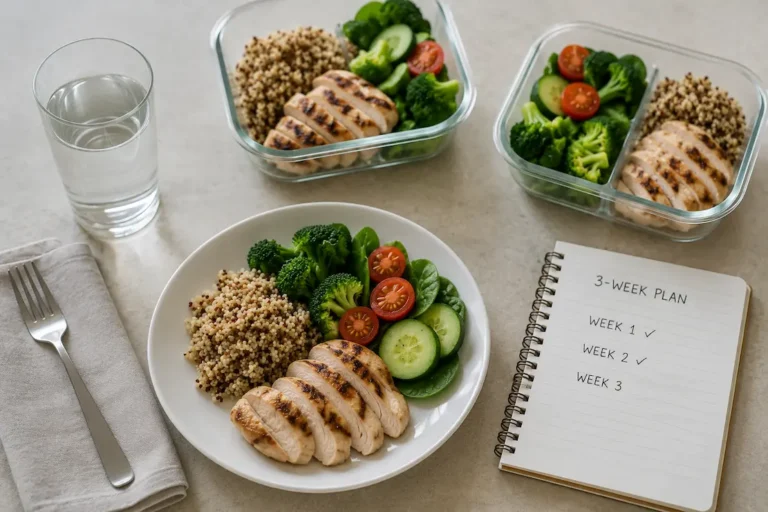
Thirty minutes: Cook proteins for the week. Grill chicken breasts, bake tofu, hard-boil eggs. Store in the middle refrigerator shelf.
Fifteen minutes: Cook a large batch of grains. Quinoa or brown rice. Store in containers for quick assembly.
Fifteen minutes: Review the pantry and freezer. Restock anything running low. Remove anything that has expired or no longer fits the system.
This ninety-minute investment eliminates hundreds of small decisions throughout the week. When every meal component is already prepared, eating healthy requires no more effort than eating poorly.
The Sunday Investment
I resisted this ritual for months because Sunday felt like my only free time. But the reality was that I spent more time during the week deciding what to eat, shopping impulsively, and cleaning up after failed cooking attempts than I ever spent on the Sunday reset. The ninety minutes saves me hours. More importantly, it saves me from myself at 7 p.m. on Wednesday.
What I Removed Entirely
This system is as much about what is absent as what is present. Here is what no longer exists in my kitchen:
Sugary drinks: No soda, no juice, no sports drinks. I drink water, black coffee, and herbal tea. If I want something sweet, I eat fruit. The absence of liquid sugar removed a significant source of empty calories without requiring any active resistance.
Processed snack foods: No chips, no crackers, no granola bars disguised as health food. If I want a snack, I eat nuts, fruit, or vegetables with hummus. These require more chewing and provide more satiety than their processed alternatives.
Multiple cooking oils: I use only olive oil and occasionally coconut oil. The decision of which fat to cook with is eliminated. The pantry is simpler. The cooking is simpler.
Excess appliances: I removed the bread maker, the pasta machine, and the deep fryer. I kept only what I use weekly: a rice cooker, a blender, and a good knife. Fewer tools mean fewer options, which means fewer decisions.
How This Changed My Eating Without Changing My Willpower
I did not become more disciplined. I became better designed. My kitchen now makes healthy choices easier than unhealthy ones. I do not resist cookies because I am strong. I resist them because they are not in my house.
The pre-cut vegetables mean I snack on carrots instead of chips. The cooked proteins mean dinner is assembly, not cooking. The portioned nuts mean I eat one serving, not the bag. The fruit bowl means dessert is an apple, not ice cream. Each of these changes required one decision on Sunday. That decision then operates automatically all week.
Research supports this approach. A study in the journal Health Psychology found that people eat more when food is visible and convenient, regardless of hunger levels. Another study from the University of Pennsylvania showed that reducing the variety of available snacks decreased overall consumption. Your environment shapes your behavior more than your intentions do.
If you are struggling to eat healthier, do not start with a diet plan. Start with your kitchen. Remove what tempts you. Prepare what nourishes you. Make the healthy option the easy option. Your willpower is finite. Your environment is constant. Design the constant to support the finite.
Related Articles
- How to Prepare Quick Nutrient-Dense Meals on Busy Days
- How I Stopped Overeating at Dinner by Eating a Bigger Lunch
- How I Eat Better Without Strict Dieting
- The After-Dinner Walking Habit That Improved My Digestion Fast
- How I Fixed Afternoon Slumps Using a Simple Hydration Schedule
- How I Stay Consistent on Busy Days
Sources and References
- Wansink, B., & Sobal, J. (2007). “Mindless eating: the 200 daily food decisions we overlook.” Environment and Behavior, 39(1), 106-123. https://journals.sagepub.com/doi/10.1177/0013916506295573
- Wansink, B., Painter, J.E., & Lee, Y.K. (2006). “The office candy dish: proximity’s influence on estimated and actual consumption.” International Journal of Obesity, 30(5), 871-875.
- Thaler, R.H., & Sunstein, C.R. (2008). Nudge: Improving Decisions About Health, Wealth, and Happiness. Yale University Press.

Abdur Rahman is a lifestyle writer focused on simple health habits and everyday wellness. He creates easy-to-understand content that helps readers improve their routines without confusion or pressure. His work covers topics like daily health habits, home fitness, simple nutrition, sleep, and stress management. He believes that small, consistent actions lead to meaningful long-term results and aims to make healthy living practical, realistic, and accessible for everyone.