Eating out used to be my biggest weakness. I’d spend six days building momentum with home-cooked meals, consistent portions, and mindful choices—only to watch it all unravel over a single dinner at a restaurant. The bread basket, the oversized portions, the dessert menu that somehow always found its way to the table. By Monday morning, I felt sluggish, bloated, and strangely defeated, as if one meal had the power to erase an entire week of effort.
It took me longer than I’d like to admit to realize the problem wasn’t dining out itself. It was my approach to it. I treated restaurant meals like a free pass, a break from the “rules,” which meant I entered every outing with a scarcity mindset. If I was going to eat out, I might as well go all in. That mentality did more damage than any single dish ever could.
Over the past two years, I’ve completely reframed how I handle restaurant meals. I still eat out regularly—probably three to four times a week—but I no longer fear it. More importantly, I no longer need a “reset” afterward. Here’s exactly what changed and how I made it stick.
The Mindset Shift That Changed Everything
Before I changed any specific behavior, I had to address the underlying belief that restaurant food was inherently “bad” and home food was inherently “good.” That black-and-white thinking set me up for failure every time. When I labeled restaurant meals as cheating, I created a psychological loophole where anything went.
Now I see eating out as simply another eating occasion. It doesn’t need special rules, and it certainly doesn’t need to be a blowout. The food isn’t the enemy—my all-or-nothing attitude was.
This shift didn’t happen overnight. It required me to stop viewing my weekly habits as fragile and start seeing them as resilient. One meal, even a less-than-ideal one, cannot undo consistent patterns. The real damage comes from the spiral: the “I’ve already messed up, so I might as well keep going” narrative that extends one indulgent meal into an entire weekend of poor choices.
My Pre-Restaurant Routine
Preparation starts before I even look at a menu. I’ve learned that walking into a restaurant hungry and decision-fatigued is a recipe for ordering everything that sounds good in the moment.
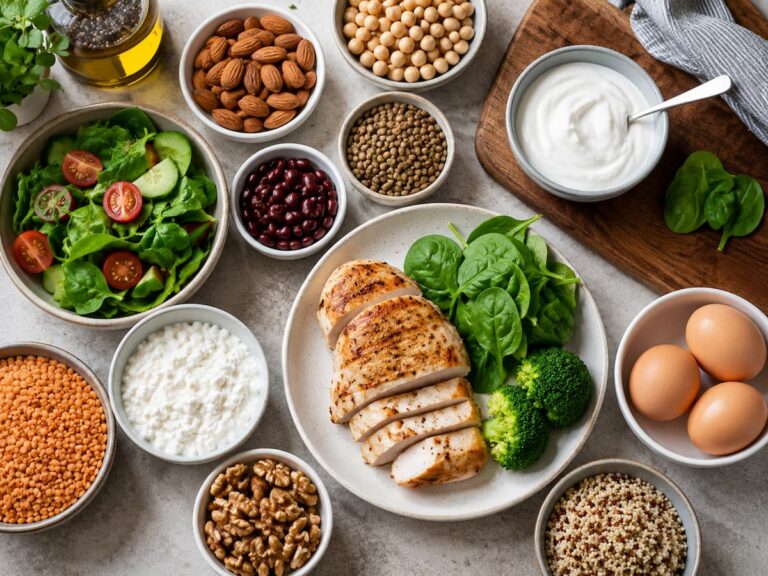
About an hour before I leave, I have a small protein-rich snack. Nothing large—just enough to take the edge off. A handful of almonds, a hard-boiled egg, or a small cup of Greek yogurt does the trick. This simple step prevents me from arriving ravenous and making choices driven by immediate hunger rather than actual preference.
I also take thirty seconds to decide my intention for the meal. Not a rigid plan, just a loose framework. Am I genuinely craving something specific? Am I there primarily for the social experience? Knowing my priority helps me allocate my attention and appetite accordingly.
The “Protein First” Rule I Follow
I borrowed this from an experiment I ran a while back, and it works just as well at restaurants as it does at home. I look at the menu and identify the protein source first—grilled fish, chicken, tofu, legumes—then build the rest of my meal around that. Starting with protein naturally crowds out excessive refined carbs and keeps me satisfied without overeating. It’s not restrictive; it’s strategic.
How I Navigate the Menu Without Stress
Restaurant menus are designed to sell, not to support your health goals. That’s not cynical—it’s just business. Once I understood this, I stopped feeling overwhelmed by options and started reading menus with a critical eye.
I look for preparation methods before ingredients. Grilled, roasted, steamed, and baked dishes tend to be lighter than fried, battered, or creamy options. I don’t avoid flavor; I just prefer the kind that comes from herbs, spices, and cooking techniques rather than heavy sauces.
When something sounds incredible but is clearly rich, I don’t automatically skip it. Instead, I ask myself if it’s worth the trade-off. A creamy pasta dish might be worth it if I’m genuinely craving it and it’s a special occasion. A mediocre creamy pasta I ordered because I couldn’t decide? That’s where regret lives.
I’ve also gotten comfortable making simple modifications. Dressing on the side. Grilled instead of fried. Extra vegetables instead of fries. Most kitchens accommodate these requests without issue, and they make a meaningful difference without making the meal feel like a sacrifice.
The Portion Reality Check
Restaurant portions have grown dramatically over the past few decades. What looks like a single serving is often closer to two or even three. I used to clean my plate out of habit, not hunger, and I paid the price in energy crashes and uncomfortable fullness.
Now, when my meal arrives, I mentally divide it in half. I eat slowly, checking in with my hunger every few bites. More often than not, I’m satisfied well before the plate is empty. When that happens, I stop. The remaining food becomes tomorrow’s lunch. This isn’t willpower; it’s awareness. The difference between stopping when satisfied and stopping when the plate is empty is often hundreds of unnecessary calories and a much more comfortable evening.
On the rare occasion I do finish everything, I don’t panic. I simply note it and move on. One larger meal doesn’t define a week. It’s the pattern that matters, and my pattern is overwhelmingly consistent.
The 80/20 Plate Method I Use
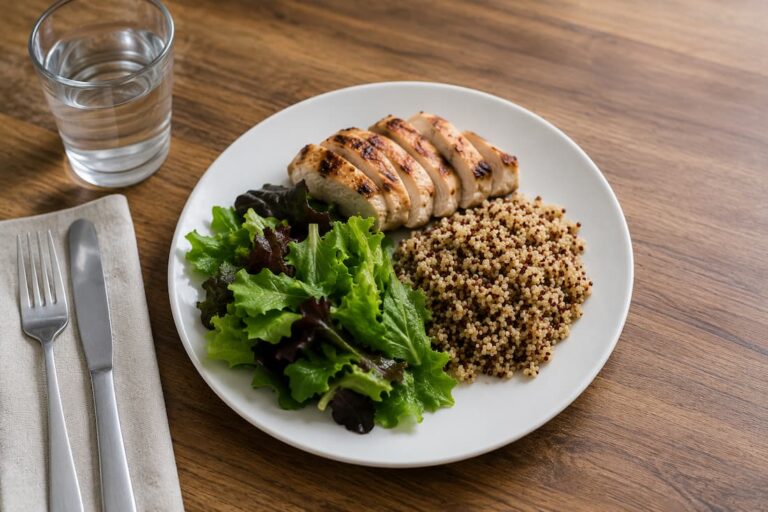
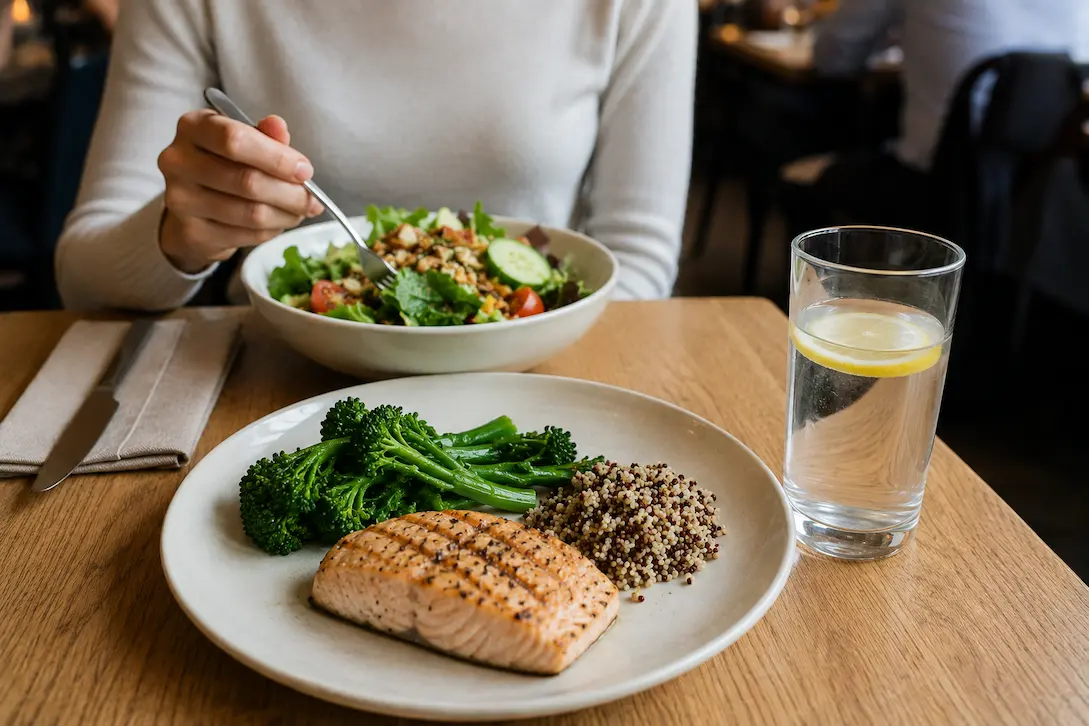
I don’t count calories at restaurants—that would make dining miserable. Instead, I eyeball my plate using a simple ratio. Roughly half the plate is vegetables or salad, a quarter is protein, and the remaining quarter is whatever else I want—rice, bread, pasta, or that side dish that caught my eye. This keeps things balanced without requiring precision or restriction. I wrote more about this approach here.
Drinking Smart Without Being Boring
Beverages are the silent saboteur of restaurant meals. A sugary cocktail before dinner, wine throughout, and a sweetened coffee afterward can add more calories than the meal itself. I learned this the hard way after tracking my intake for a few weeks and realizing my drinks were the real culprit.
These days, I start with water. Always. It helps with hydration, curbs false hunger, and gives me time to settle into the experience before making drink decisions. If I want alcohol, I have one drink and savor it. I choose quality over quantity—a good glass of wine or a well-made cocktail that I actually enjoy, not something I mindlessly sip because it’s there.
I also alternate alcoholic drinks with water. This isn’t about restriction; it’s about feeling good the next morning. Nothing derails a week of habits faster than a hangover that leads to poor food choices and skipped workouts.
Handling Social Pressure Gracefully
Dining out is rarely just about food. It’s about connection, celebration, and shared experience. The social element can make sticking to your intentions tricky, especially when others encourage you to “live a little” or “just enjoy yourself.”
I’ve learned that confidence is contagious. When I order what I actually want without apologizing or explaining, people rarely push back. The problem usually arises when I seem uncertain or defensive about my choices. If I order a salad because I genuinely want it, no one questions it. If I order a salad while loudly lamenting that I “shouldn’t,” I invite commentary and temptation.
When friends insist on sharing appetizers or ordering dessert for the table, I participate selectively. I’ll have a bite of something that truly appeals to me and pass on the rest. A taste is enough to feel included without committing to a full portion of something I didn’t choose.
The “One Bite” Dessert Strategy
Dessert menus are designed to tempt, and they work. My compromise is simple: if I genuinely want dessert, I order one and share it. If no one wants to share, I take one deliberate bite of someone else’s and let that be enough. Surprisingly, the first bite delivers most of the pleasure anyway. Everything after is just momentum. This strategy satisfies the craving without the sugar crash or the next-day regret.
What I Do the Next Day
Here’s the part that actually protects my weekly habits: I don’t compensate. No skipped meals, no extra cardio, no “making up for it.” Punishing myself for enjoying a meal creates a toxic cycle where food becomes a transaction rather than nourishment.
Instead, I simply return to my normal routine. Same breakfast, same lunch, same movement patterns. This consistency is what makes restaurant meals sustainable. They exist within my life, not outside of it.
Occasionally, if I ate particularly rich food, I might feel like something lighter the next day. But that’s a preference, not a penance. A simple breakfast, a walk after lunch, plenty of water—these are things I do regularly, not reactions to a specific meal.
Why This Works Long-Term
The reason this approach has stuck while others failed is that it doesn’t rely on perfection. I don’t need to make the “best” choice every time. I just need to make a decent choice most of the time. That threshold is achievable, which means I actually do it.
Restaurant meals used to trigger anxiety. Now they’re neutral, even enjoyable. I can appreciate good food, good company, and good conversation without the mental math or the next-day guilt. The habits I built during the week are strong enough to accommodate real life, and that’s exactly how they should be.
If you’re struggling with the same cycle—building momentum only to see it crumble over a single dinner—consider that the problem might not be the restaurant. It might be the story you’re telling yourself about what that meal means. Change the story, and the meal becomes just another part of your week.
Quick Recap: My Restaurant Rules
- Have a small protein snack before leaving
- Start with water, alternate drinks if having alcohol
- Build the meal around protein first
- Use the 80/20 plate method visually
- Eat slowly and stop when satisfied, not when the plate is empty
- Share dessert or take one mindful bite
- Return to normal routine the next day—no compensation needed
Related Articles
- How I Eat Better Without Strict Dieting
- The Simple Plate Method I Use When I Don’t Want to Think About Food
- How I Cut Sugar Cravings Using a 3-Week Protein-First Experiment
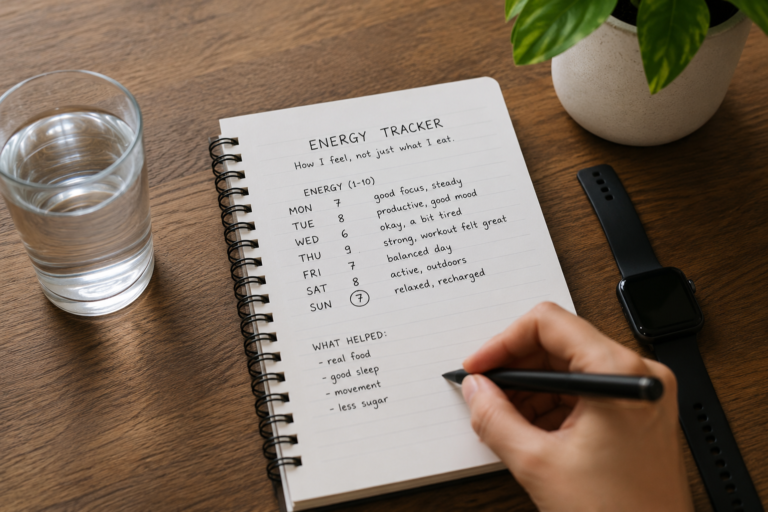
- Why I Stopped Counting Calories and Started Tracking Energy Instead
- What I Keep in My Kitchen to Make Healthy Eating Automatic
- How I Stopped Overeating at Dinner by Eating a Bigger Lunch
Sources and References
- Rolls, B. J. (2014). “What is the role of portion control in weight management?” International Journal of Obesity, 38(S1), S1-S8.
- Wansink, B., & Payne, C. R. (2008). “Eating behavior and obesity at Chinese buffets.” Obesity, 16(8), 1957-1960.
- Chapman, C. D., et al. (2014). “Lifestyle determinants of the drive to eat: A meta-analysis.” American Journal of Clinical Nutrition, 100(6), 1640-1646.

Abdur Rahman is a lifestyle writer focused on simple health habits and everyday wellness. He creates easy-to-understand content that helps readers improve their routines without confusion or pressure. His work covers topics like daily health habits, home fitness, simple nutrition, sleep, and stress management. He believes that small, consistent actions lead to meaningful long-term results and aims to make healthy living practical, realistic, and accessible for everyone.