Why Gratitude Matters for Mental Well-Being
The human mind naturally pays attention to problems. This ability helps us identify risks and solve challenges, but it can also make us overlook positive experiences. A person may receive several compliments during the week but remember one negative comment more strongly. Gratitude creates a healthier balance by encouraging awareness of positive moments. When people regularly reflect on what they appreciate, they may become more aware of supportive relationships, personal strengths, and everyday comforts that are easy to overlook.
Many factors, including sleep, relationships, physical activity, stress management, and emotional habits, influence mental wellbeing. Gratitude is one small practice that can support a more positive emotional routine when combined with other healthy behaviors. The goal is not to force happiness. Some days will still feel difficult. Gratitude simply creates space to notice that challenges are not the only part of life.
Start With a Simple Gratitude Journal
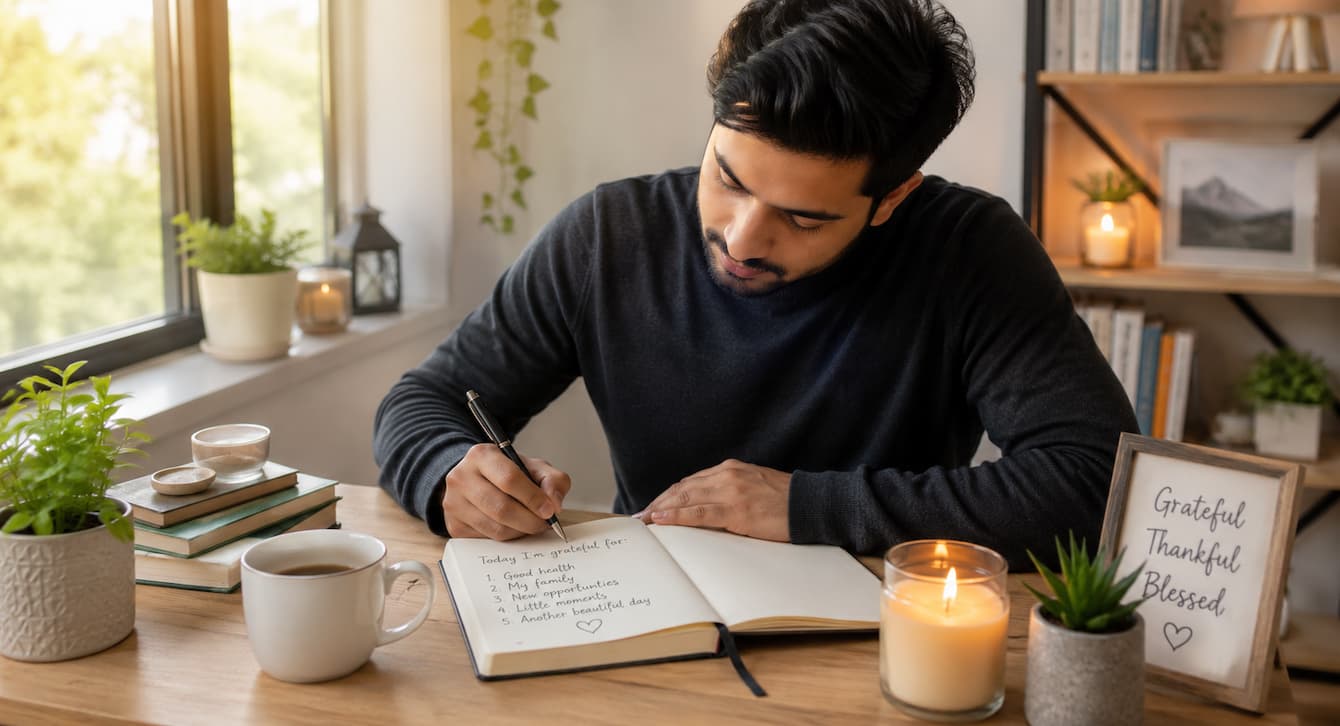
A gratitude journal is one of the easiest ways to practice appreciation regularly. The idea is simple: write down things you are thankful for. This can be done in a notebook, a digital document, or a notes app on your phone. Many beginners make the mistake of thinking they need to write long paragraphs. A few meaningful sentences are enough. The purpose is not to create a perfect journal but to develop a habit of noticing positive experiences.
For example, instead of writing:
“I had a good day.”
A person might write:
“I appreciated the quiet walk after work because it helped me clear my mind.”
Details make gratitude more powerful because they help the brain revisit the actual experience instead of just recording a general idea.
A Simple Gratitude Journal Routine
| Time | Practice | Example |
| Morning | Write one thing you look forward to | “I am grateful for having time to enjoy breakfast.” |
| Evening | Reflect on positive moments | “I appreciated my conversation with a friend today.” |
| During stress | Pause and notice something good | “I am thankful for having a safe place to rest.” |
Practice Gratitude During Everyday Activities
Gratitude does not have to be a separate task added to an already busy schedule. It can become part of normal activities throughout the day. While drinking coffee or tea, a person can take a few seconds to appreciate the moment. During a walk, they can notice the weather, surroundings, or physical ability to move. Before sleeping, they can remember one positive experience from the day.
These small moments matter because habits are easier to maintain when they fit naturally into existing routines. A common mistake is waiting for a major achievement before feeling grateful. Many people think they will appreciate life more after reaching a goal, earning more money, or solving a problem. While achievements can bring satisfaction, everyday gratitude helps people recognize value in the present moment.
Use Gratitude to Strengthen Relationships
Human connections play an important role in emotional health. Expressing appreciation can improve relationships because people feel recognized and valued. A simple thank-you message, a kind comment, or telling someone you appreciate their effort can make a meaningful difference. Gratitude is not only an internal practice; it can also be shared with others.
For example, instead of assuming a family member knows they are appreciated, expressing that appreciation directly creates a stronger emotional connection. However, gratitude should feel genuine. Saying positive words only because it feels like an obligation can make the practice feel artificial. Honest appreciation is more meaningful when it reflects a real observation.
How to Maintain a Gratitude Habit Long Term
Like any habit, gratitude becomes easier with consistency. Many people start enthusiastically but stop after a few days because they create unrealistic expectations. A better approach is to begin with a small commitment. Writing one sentence each day may be more effective than planning a detailed journal entry that becomes difficult to maintain.
It also helps to connect gratitude with an existing routine. For example, someone may write in a gratitude journal after brushing their teeth at night or during their morning coffee. If the habit is missed for a few days, there is no need to abandon it completely. Simply restarting is part of building a lasting practice.
Common Mistakes When Practicing Gratitude
- Using gratitude to avoid problems: Appreciating positive things does not mean ignoring stress, sadness, or difficult situations.
- Repeating the same thoughts without reflection: Writing the same entry every day may reduce the personal meaning of the practice.
- Comparing gratitude with other people’s lives: Gratitude focuses on personal appreciation, not measuring yourself against others.
- Expecting instant results: Emotional habits usually develop gradually through repetition.
A healthy gratitude practice should feel supportive rather than like another responsibility on a long to-do list.
Small Gratitude Exercises You Can Try Today
The best gratitude exercise is one that feels realistic for your lifestyle. Here are a few simple ideas:
- Write three things you appreciated before going to sleep.
- Send a short message thanking someone who helped you.
- Notice one ordinary thing that makes your day easier.
- During stressful moments, identify one thing that is still going well.
- Keep a gratitude note on your desk or phone.
These exercises take only a few minutes but can encourage a more mindful approach to daily experiences.
FAQs
1. How long does it take to build a gratitude habit?
The time required varies from person to person. The most important factor is consistency rather than following a specific number of days. A small daily practice is usually easier to maintain than a complicated routine.
2. Can gratitude replace professional mental health support?
No. Gratitude can be a helpful well-being practice, but it is not a replacement for professional support when someone is dealing with serious mental health concerns. It works best as one part of a broader approach to emotional health.
3. What if I cannot find things to be grateful for during difficult times?
During stressful periods, gratitude can become basic. It may be appreciation for a warm meal, a safe environment, a kind conversation, or a moment of rest. Small examples still count.
4. Is writing gratitude lists better than thinking about gratitude?
Writing can make thoughts clearer and easier to remember, but reflection in your mind can also be useful. The best method is the one you can practice regularly.
Final Thoughts
Daily gratitude is a simple mental habit that encourages people to pay attention to positive parts of life that might otherwise go unnoticed. It does not remove challenges, but it can change how people relate to them. The most effective gratitude practice is not complicated. A few thoughtful moments each day can create a healthier pattern of awareness and appreciation. By starting small and staying consistent, gratitude can become a natural part of everyday life.
References
- American Psychological Association (APA) – Resources on gratitude, emotions, and psychological well-being.
- Harvard Health Publishing – Articles on positive psychology practices and emotional health.
- University of California, Berkeley Greater Good Science Center – Research-based resources on gratitude and well-being.

Abdur Rahman is a lifestyle writer focused on simple health habits and everyday wellness. He creates easy-to-understand content that helps readers improve their routines without confusion or pressure. His work covers topics like daily health habits, home fitness, simple nutrition, sleep, and stress management. He believes that small, consistent actions lead to meaningful long-term results and aims to make healthy living practical, realistic, and accessible for everyone.