I used to skip lunch or eat something small, telling myself I was being disciplined. A salad. A protein bar. Maybe a piece of fruit if I was feeling indulgent. By 5 p.m., I was starving. By 7 p.m., I was standing in front of my refrigerator eating cheese directly from the block while my dinner cooked. The dinner itself was always too large because my body was screaming for calories I had denied it all day.
The pattern was invisible to me for years. I thought my problem was willpower at night. I tried eating smaller dinners, drinking water before meals, using smaller plates. All of it failed because it didn’t target the underlying issue: my daytime eating was so insufficient that my body demanded compensation at the exact moment my willpower was lowest.
Everything changed when I reversed the pattern. I started eating a substantially bigger lunch and watched what happened to my evening appetite. The results were immediate and sustained.
What I Was Actually Eating Before
To understand the problem, I logged everything I ate for one week before making any changes. The pattern was stark.
| Meal | Typical Food | Estimated Calories |
|---|---|---|
| Breakfast | Coffee, sometimes a banana | 100-150 |
| Lunch | Small salad with grilled chicken, no dressing | 250-300 |
| Afternoon snack | Protein bar or handful of nuts | 150-200 |
| Dinner | Large portion of pasta, rice, or meat with vegetables | 900-1,200 |
| Evening snacking | Cheese, crackers, ice cream, chips | 400-600 |
I was consuming roughly half my daily calories after 6 p.m. My daytime intake was so low that my blood sugar crashed every afternoon. By evening, my body was in survival mode, driving me toward calorie-dense foods with minimal satiety value. I was not weak-willed. I was physiologically desperate.
The Compensation Trap
Your body does not care about your diet intentions. It cares about energy balance. When you under-eat during the day, your body increases hunger hormones and reduces satiety signals in the evening. This is not a character flaw. It is biology protecting you from starvation. The solution is not more willpower at night. It is adequate fuel during the day.
The Bigger Lunch Experiment
I committed to a simple change for thirty days: make lunch my largest meal of the day. Not slightly larger. Substantially larger. I aimed for 600-700 calories at lunch, which meant my lunch needed to roughly double in size.
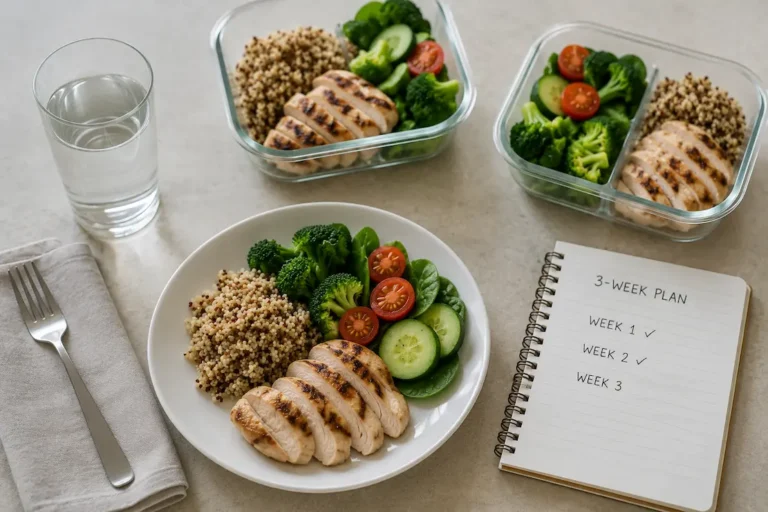
This required planning because my schedule did not accommodate cooking a full meal midday. I started preparing lunch the night before, packing containers with protein, complex carbohydrates, vegetables, and healthy fats. The key was making lunch satisfying enough that I genuinely looked forward to eating it.
| Meal | New Typical Food | Estimated Calories |
|---|---|---|
| Breakfast | Eggs, whole grain toast, avocado | 400-450 |
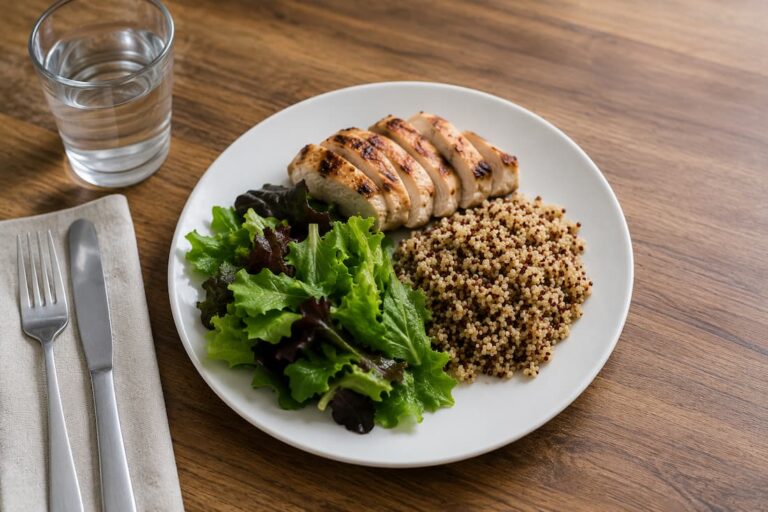
| Lunch | Grilled chicken, quinoa, roasted vegetables, olive oil | 650-700 |
| Afternoon snack | Greek yogurt with berries | 150-200 |
| Dinner | Smaller portion of fish or tofu with vegetables | 450-500 |
| Evening snacking | Herbal tea, occasionally a small piece of dark chocolate | 50-100 |
The total daily calories remained roughly the same. The distribution changed dramatically. Instead of 60 percent of calories after 6 p.m., I was now consuming 60 percent before 3 p.m.
What Happened in the First Week
The changes started on day two. I ate my bigger lunch at noon and noticed something unfamiliar by 4 p.m.: I was not starving. I was not counting down the minutes until dinner. I did not need an emergency snack to prevent hanger.
By day three, my dinner portions shrank naturally. I served myself the same amount I always had, but I could not finish it. My body was already satisfied. The food still tasted good, but the urgency was gone. I ate slowly, stopped when full, and did not feel deprived.
The evening snacking disappeared almost entirely. Not because I was resisting it. Because I did not want it. The cheese block stayed in the refrigerator. The ice cream container remained unopened. My body had received adequate fuel during the day and no longer demanded compensation at night.
The Satiety Shift
Satiety is not just about calories. It is about timing and composition. A large lunch with adequate protein, fiber, and fat signals your body that food is available. This suppresses ghrelin, the hunger hormone, for hours. When ghrelin stays low through the afternoon, evening overeating becomes physiologically unnecessary rather than willfully resisted.
The 30-Day Results
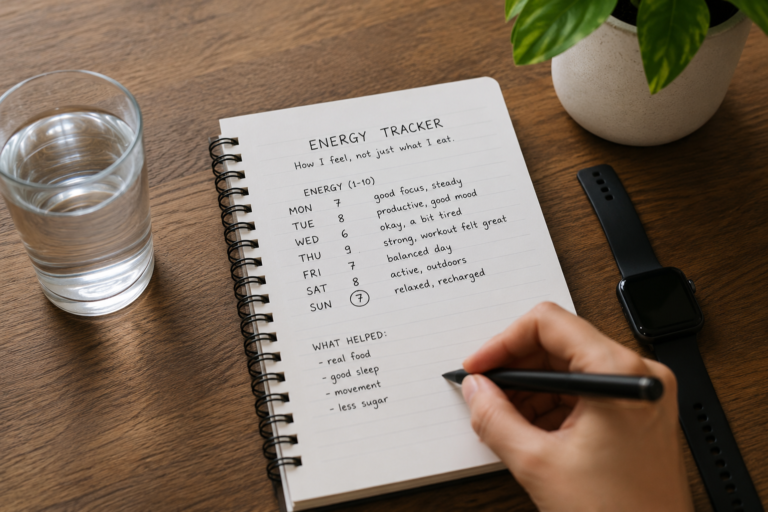
I tracked four metrics throughout the experiment: evening hunger, dinner portion size, evening snacking frequency, and subjective energy levels.
| Metric | Before | After 30 Days |
|---|---|---|
| Evening hunger (1-10) | 8.5 / 10 | 3.2 / 10 |
| Dinner portion (relative) | Large plate, often seconds | Medium plate, rarely seconds |
| Evening snacking days per week | 6-7 days | 1-2 days |
| Afternoon energy (3 p.m.) | 4.1 / 10 | 7.3 / 10 |
The afternoon energy improvement was unexpected. I had assumed a bigger lunch would make me sleepy. The opposite happened. My previous light lunches caused a blood sugar spike and crash. The new lunch, with more protein, fiber, and complex carbohydrates, provided steady energy through the afternoon. I was more productive at work and less dependent on caffeine.
Why the Bigger Lunch Works
The mechanism is straightforward once you understand hunger hormones. Ghrelin rises before meals and falls after eating. When you eat a small lunch, ghrelin suppression is minimal and short-lived. By late afternoon, ghrelin is elevated again, driving you toward food.
A substantial lunch with adequate protein and fiber suppresses ghrelin more effectively and for longer. Protein is particularly satiating because it triggers the release of peptide YY and glucagon-like peptide-1, both of which signal fullness to the brain. Fiber slows gastric emptying, extending the feeling of fullness.
Research published in the International Journal of Obesity found that participants who consumed a larger lunch and smaller dinner lost more weight and reported greater satiety than those who ate the same total calories distributed differently. The timing of calorie intake matters independently of the total amount.
The Circadian Connection
Your body processes food differently at different times of day. Insulin sensitivity is higher in the morning and midday, meaning your body uses carbohydrates more efficiently earlier in the day. By evening, insulin sensitivity declines. The same meal eaten at 7 p.m. produces a larger blood sugar response than the same meal eaten at noon. Eating your largest meal when your body is most equipped to handle it is not just about hunger. It is about metabolism.
What a Satisfying Lunch Actually Looks Like
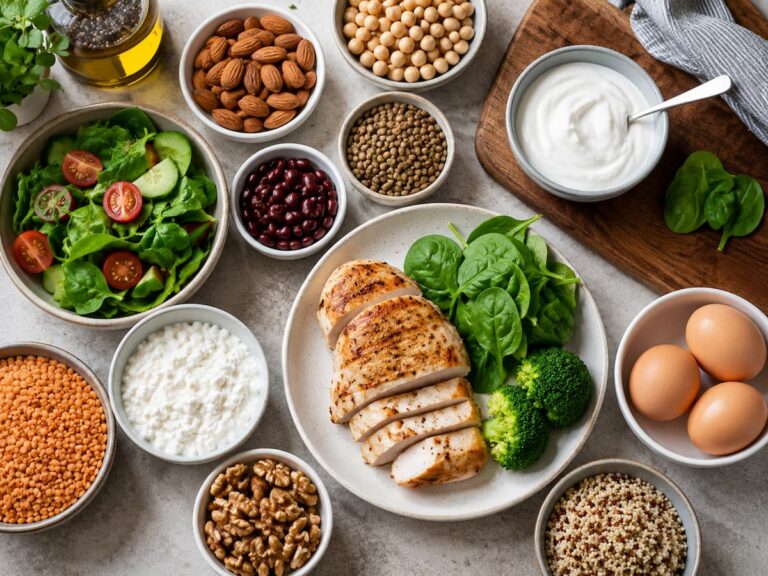
Size alone is not enough. A large lunch of refined carbohydrates will spike blood sugar and crash energy. The composition matters as much as the quantity. Here is my formula:
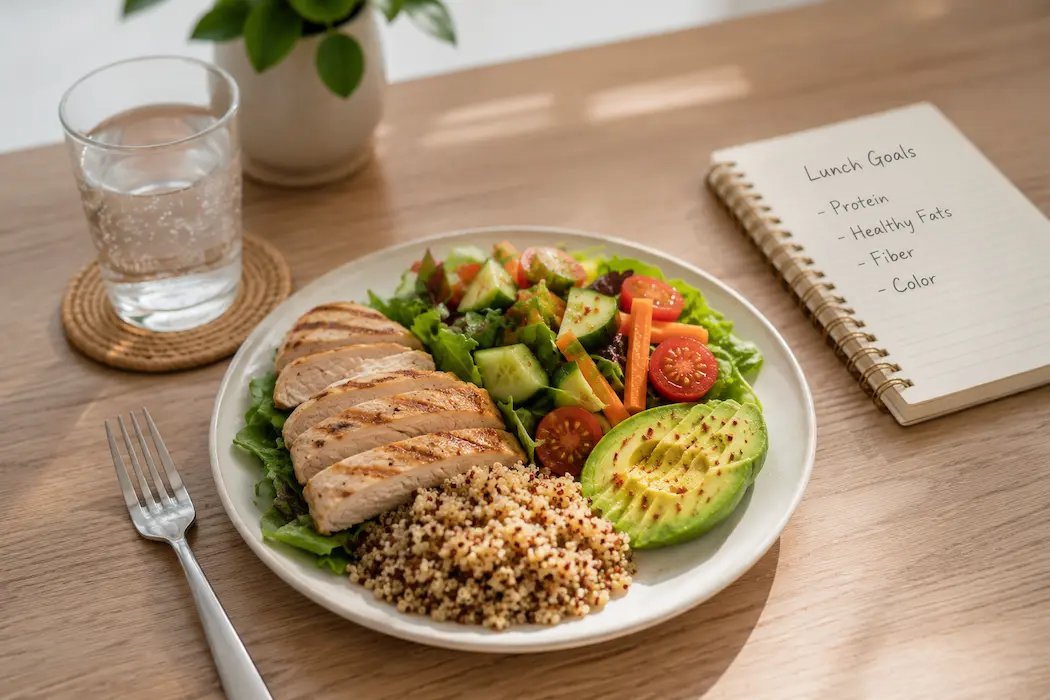
Protein: At least 30 grams. This is roughly a palm-sized portion of chicken, fish, tofu, or legumes. Protein is the most satiating macronutrient and the key to afternoon hunger suppression.
Complex carbohydrates: One cup of cooked grains, starchy vegetables, or legumes. Quinoa, brown rice, sweet potato, or lentils provide sustained energy without the crash of refined options.
Vegetables: Two cups minimum, cooked or raw. Volume matters for fullness, and vegetables provide fiber that slows digestion.
Healthy fat: One to two tablespoons of olive oil, avocado, nuts, or seeds. Fat enhances satiety and makes the meal satisfying enough that you do not feel deprived.
This combination produces a meal that is physically large, nutritionally complete, and metabolically appropriate for midday. It feels substantial because it is substantial.
Common Objections I Had to Overcome
When I first considered this approach, I had several concerns that almost stopped me:
“I do not have time to cook a big lunch.” Neither do I. I batch-cook proteins and grains on Sunday. Each morning, I assemble a container with pre-cooked ingredients and fresh vegetables. Assembly takes five minutes. Cooking happens when I have time.
“I will fall asleep at my desk.” This was my biggest fear. The opposite happened. My previous light lunches caused a crash because they lacked protein and fiber. The new lunch provides steady energy. I am more alert at 3 p.m. than I was before.
“Eating more during the day will make me gain weight.” My total daily calories did not increase. They shifted. I was already eating those calories at night. Moving them earlier did not add energy. It redistributed it. Over the thirty days, my weight remained stable while my evening habits improved dramatically.
How I Maintain This Long-Term
I am now eight months into eating a larger lunch. The habit is automatic. My body expects substantial food at midday and signals hunger accordingly. But I have made adjustments based on experience.
On days when I exercise in the evening, I increase dinner slightly to support recovery. The lunch remains large, but dinner is not as small as on sedentary days. Flexibility within the framework prevents rigidity.
On weekends, the structure loosens. I might have a larger brunch and a lighter dinner, or distribute calories more evenly if social plans dictate. The weekday pattern is the anchor. Weekend variation does not derail it.
I also stopped weighing and measuring food after the first month. The initial precision was necessary to learn what 600-700 calories of satisfying food looks like. Now I eyeball portions based on the protein-vegetable-carbohydrate-fat formula. The habit has become intuitive.
What This Approach Cannot Fix
Eating a bigger lunch will not solve emotional eating, binge eating disorder, or food addiction. If your evening overeating is driven by stress, trauma, or psychological distress, the solution requires professional support. No meal timing strategy addresses root causes that are not physiological.
It also will not work if your daytime eating is already adequate and your evening overeating is purely habitual. In that case, the issue is behavior pattern, not energy deficit. Identifying which category you fall into is essential before adopting any strategy.
But if you are like I was — undereating during the day, ravenous at night, and blaming your willpower — this approach may be the entire solution. I spent years fighting evening cravings that disappeared the moment I started feeding myself properly at lunch.
Try it for two weeks. Make lunch your largest meal. Include adequate protein, fiber, and healthy fat. Notice what happens to your evening appetite. The change may surprise you as much as it surprised me.
Related Articles
- How to Prepare Quick Nutrient-Dense Meals on Busy Days
- How I Eat Better Without Strict Dieting
- The After-Dinner Walking Habit That Improved My Digestion Fast
- How I Fixed Afternoon Slumps Using a Simple Hydration Schedule
- How I Stay Consistent on Busy Days
- What I Keep in My Kitchen to Make Healthy Eating Automatic
Sources and References
- Jakubowicz, D., et al. (2013). “High caloric intake at breakfast vs. dinner differentially influences weight loss of overweight and obese women.” Obesity, 21(12), 2504-2512. https://onlinelibrary.wiley.com/doi/abs/10.1002/oby.20460
- Leidy, H.J., et al. (2015). “The role of protein in weight loss and maintenance.” American Journal of Clinical Nutrition, 101(6), 1320S-1329S.
- Garaulet, M., et al. (2013). “Timing of food intake predicts weight loss effectiveness.” International Journal of Obesity, 37(4), 604-611.

Abdur Rahman is a lifestyle writer focused on simple health habits and everyday wellness. He creates easy-to-understand content that helps readers improve their routines without confusion or pressure. His work covers topics like daily health habits, home fitness, simple nutrition, sleep, and stress management. He believes that small, consistent actions lead to meaningful long-term results and aims to make healthy living practical, realistic, and accessible for everyone.