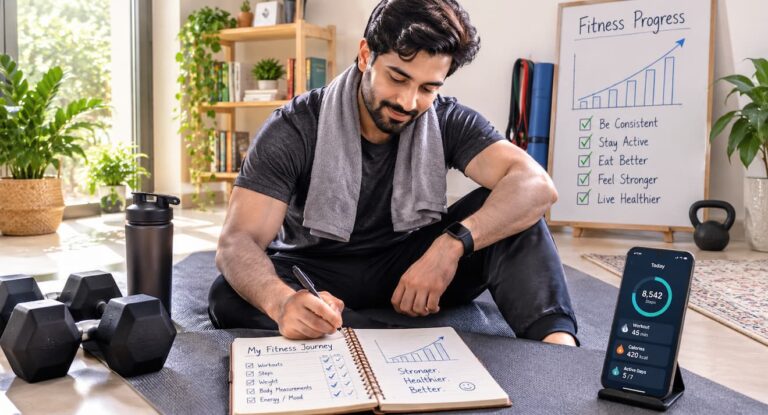
For three years, I believed that a workout wasn’t real unless it lasted at least an hour. I scheduled my gym sessions like appointments, blocked off entire evenings, and packed a bag with enough gear for a weekend expedition. On paper, I was doing everything right. In reality, I was exhausted, inconsistent, and barely making progress.
The breaking point came on a Tuesday evening. I had planned a full-body session after work, but a late meeting pushed my start time to 8:30 PM. I dragged myself through the motions, finished at 9:45, and got home too wired to sleep. The next morning, I skipped my planned workout entirely because I was still tired. That cycle—overcommit, under-recover, miss sessions—repeated itself for months.
Then I made a change that felt almost irresponsible at the time. I cut my workouts down to fifteen minutes. Not as a temporary fix or a busy-week compromise, but as my permanent approach. The results surprised me so much that I never went back.
The Myth of the Perfect Workout Length
We have been conditioned to associate duration with effectiveness. A sixty-minute workout must be better than a thirty-minute one. Ninety minutes must be superior to sixty. This thinking ignores the variables that actually matter: intensity, consistency, recovery, and individual capacity.
My long workouts suffered from diminishing returns. The first twenty minutes were productive. The next twenty were maintenance. The final twenty were often counterproductive—fatigue-driven compensation, sloppy form, and elevated stress hormones that interfered with recovery. I was spending more time but getting less quality.
Research on exercise timing consistently shows that intensity and consistency trump duration. A short, focused session done regularly produces better outcomes than a long, sporadic one. My own experience confirmed this. When I stopped measuring workouts by the clock and started measuring them by effort and recovery, everything changed.
How I Designed My First 15-Minute Circuit
The transition required a complete redesign of how I exercised. I couldn’t simply compress my old routine into a shorter window. I had to rethink the structure entirely.
I chose compound movements that worked multiple muscle groups simultaneously. Squats, push-ups, rows, and lunges formed the foundation. These exercises deliver more systemic fatigue in less time than isolation work, which made them ideal for short sessions.
I eliminated rest periods between exercises. Instead of resting after each set, I moved directly from one movement to the next, creating a continuous circuit. This kept my heart rate elevated and maximized the metabolic impact of every minute.
I capped each session at three rounds of five exercises. That structure—fifteen total sets across a full-body stimulus—provided enough volume to drive adaptation without exhausting my recovery capacity. If I finished early, I added a fourth round. If I was struggling, I stopped at two. The flexibility prevented the all-or-nothing mentality that had derailed me before.
My Go-To 15-Minute Circuit Template
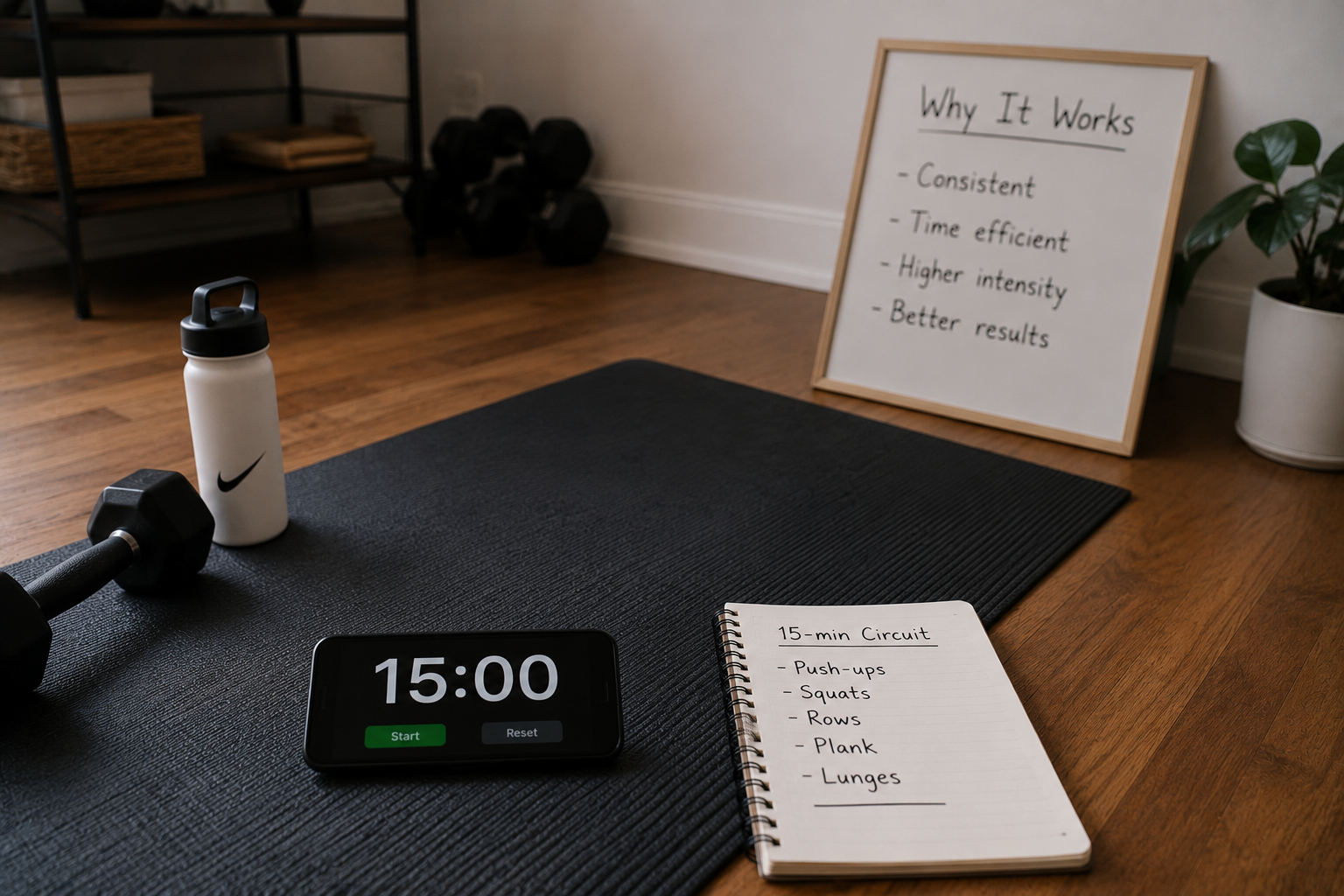
I rotate through several circuits, but this is the one I return to most often. Each exercise is performed for 40 seconds, followed by 20 seconds of transition to the next movement. Complete three rounds with no extended rest between rounds.
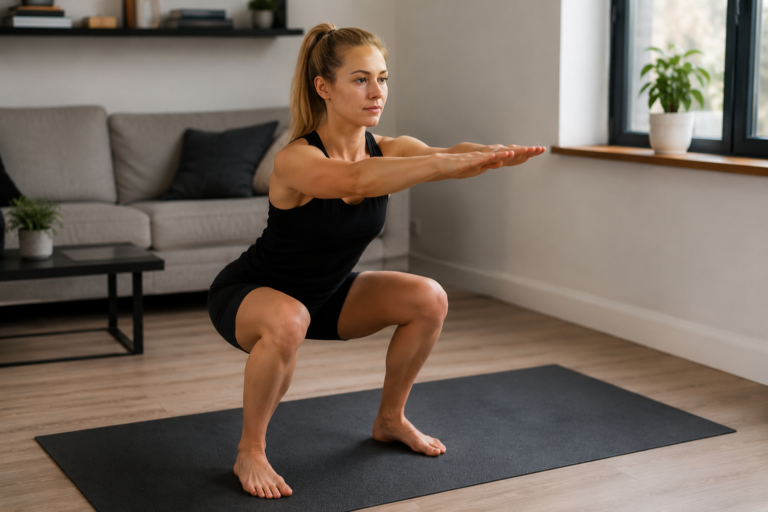
- Bodyweight Squats – 40 seconds
- Push-ups – 40 seconds
- Reverse Lunges – 40 seconds per leg
- Plank Hold – 40 seconds
- Glute Bridges – 40 seconds
This hits every major muscle group, requires zero equipment, and can be done in a space the size of a yoga mat. I wrote about how I built my squat foundation from scratch here.
The Consistency Breakthrough
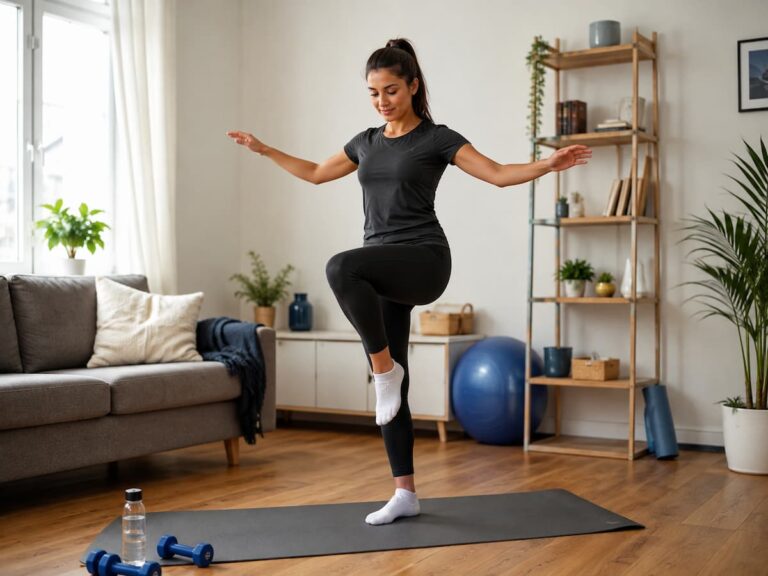
The most dramatic change wasn’t physical. It was behavioral. Fifteen minutes is short enough to eliminate almost every excuse. I didn’t need to change into gym clothes, drive anywhere, or block off an evening. I could roll out a mat in my living room, set a timer, and be done before my coffee cooled.
This accessibility changed my relationship with exercise entirely. Missing a session no longer triggered guilt or a need to reschedule. I simply did it the next day. The psychological barrier dropped so low that consistency became almost automatic.
Over six months, I completed more workouts than I had in the previous year. The cumulative effect of frequent, moderate stimulus far exceeded the sporadic, high-volume approach I had clung to before. My strength improved, my energy stabilized, and I no longer dreaded exercise.
Why I Actually Gained More Strength
This was the counterintuitive part. Conventional wisdom says longer workouts build more muscle. My experience proved otherwise, and the explanation lies in recovery and frequency.
Long workouts create deep fatigue that requires extended recovery. When I trained for an hour, I needed two or three days before I could repeat the same muscle groups effectively. That limited me to two or three sessions per week for any given body part.
Short circuits create manageable fatigue. I could train the same movements five or six times per week without overreaching. That higher frequency meant more total practice, better motor learning, and more frequent protein synthesis stimulation. My muscles received growth signals more often, even though individual sessions were shorter.
I also trained with higher relative intensity. Knowing I only had fifteen minutes pushed me to work harder during the time I had. There was no pacing myself for a long session. Every round demanded full effort because the finish line was always visible.
The Recovery Advantage Nobody Talks About
Short workouts don’t just save time during the session. They save time afterward. I no longer needed long naps on workout days, my evening energy stayed stable, and my sleep quality improved dramatically. Excessive training volume elevates cortisol and suppresses parasympathetic recovery. By keeping sessions brief, I preserved my nervous system’s capacity to adapt and grow stronger. The gains happened between workouts, not during them. If you’re dealing with burnout from overtraining, my reset approach might help—here’s how I recovered.
How I Progress Without Adding Time
The obvious concern with short workouts is plateauing. If you’re only training fifteen minutes, how do you keep improving once the initial adaptation phase ends?
I use several progression strategies that add challenge without adding minutes. First, I increase density—completing the same work in less time. If three rounds used to take me fifteen minutes, I aim to finish them in twelve. The compressed rest periods increase intensity without changing the exercises.
Second, I advance the movements themselves. Elevated push-ups become floor push-ups, which become decline push-ups. Bodyweight squats become jump squats. Static planks become plank rows. Each progression demands more from the same muscle groups within the same time frame.
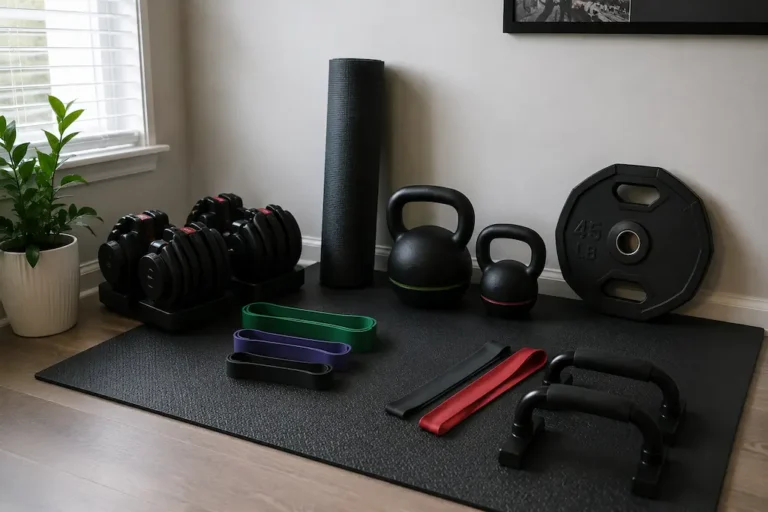
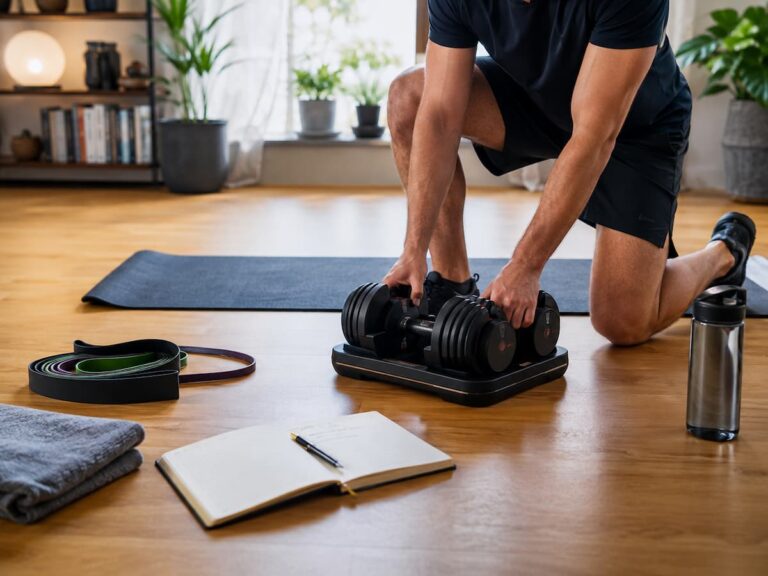
Third, I add minimal equipment strategically. A single kettlebell or resistance band opens up dozens of exercise variations that load the body more effectively than bodyweight alone. I invested in a few versatile pieces rather than accumulating a home gym I wouldn’t use. Here’s what I actually use after two years of experimentation.
The Mental Shift That Made It Stick
Beyond the physical mechanics, the biggest barrier to short workouts is psychological. We have been taught to equate suffering with progress. A workout that doesn’t leave us drenched in sweat feels like cheating. I had to unlearn that narrative entirely.
Now I judge my sessions by how I feel the next day, not by how hard they felt in the moment. A good workout leaves me energized, mobile, and eager to move again. A bad one leaves me sore, drained, and dreading the next session. The fifteen-minute approach consistently delivers the former.
I also stopped comparing my routine to what others do. Social media is filled with people posting two-hour gym sessions and complex split routines. That might work for them. It doesn’t work for me, and pretending otherwise only created frustration. My fitness journey is mine alone, and it needs to fit my life, not someone else’s.
When I Still Do Longer Sessions
Fifteen minutes is my baseline, not my absolute limit. On weekends when I have more time and energy, I occasionally extend to thirty or forty minutes. I also take longer walks, hike, or play recreational sports. These aren’t workouts in the traditional sense—they’re movement for enjoyment. The difference is that my formal training no longer depends on having large blocks of free time. My fitness foundation is built on something sustainable, and everything else is a bonus.
What I Lost and What I Gained
Switching to short circuits meant giving up certain things. I no longer have the social aspect of gym culture, the variety of dozens of machines, or the satisfaction of a long, grinding session on a difficult day. Those losses are real, and I acknowledge them.
But what I gained matters more. I gained consistency, which is the single most important variable in fitness. I gained time—hours per week that I now spend on sleep, relationships, and work that matters to me. I gained energy, because I’m no longer recovering from workouts that depleted me more than they built me up.
Most importantly, I gained a sustainable practice. Exercise is no longer something I do in phases, starting and stopping with my motivation. It is a permanent, integrated part of my daily life. That stability produces better results than any periodized program ever could.
Who This Approach Works For
Short circuits are not for everyone. Competitive athletes, bodybuilders, and people with specific performance goals need structured, longer training. But for the majority of people reading this—those who want to be stronger, healthier, and more energetic without making fitness their entire identity—this approach is transformative.
If you struggle with consistency, dread your workouts, or find that exercise interferes with the rest of your life, consider experimenting with shorter sessions. The barrier to entry is low, the time commitment is minimal, and the results might surprise you. I spent years believing more was better. It took courage to try less. That courage paid off.
Quick Guidelines for Building Your Own 15-Minute Circuit
- Choose 4-6 compound movements that cover your entire body
- Use a timer, not rep counts, to maintain pace and intensity
- Move continuously with minimal rest between exercises
- Complete 2-4 rounds depending on your fitness level
- Progress by increasing density, advancing exercises, or adding light resistance
- Train 5-6 days per week for frequency, not 2-3 days for duration
- Track completion, not performance—consistency is the metric that matters
Related Articles
- How I Built a Bodyweight Squat Habit When I Couldn’t Do One Properly
- A Balanced Weekly Home Workout Schedule That Prevents Burnout
- The Home Workout Equipment I Actually Use After 2 Years of Buying Stuff
- Creating a Small Space Workout Corner That Encourages Daily Exercise
- How I Stay Consistent on Busy Days
- How I Recovered From a Week of Burnout Using a 3-Day Reset Plan
Sources and References
- Schoenfeld, B. J., et al. (2016). “Effects of resistance training frequency on measures of muscle hypertrophy: A systematic review and meta-analysis.” Sports Medicine, 46(11), 1689-1697.
- Gibala, M. J., et al. (2012). “Physiological adaptations to low-volume, high-intensity interval training in health and disease.” Journal of Physiology, 590(5), 1077-1084.
- Steele, J., et al. (2017). “Resistance training to momentary muscular failure improves cardiovascular fitness in humans: A review of acute physiological responses and chronic physiological adaptations.” Journal of Exercise Physiology Online, 15(3), 53-68.

Abdur Rahman is a lifestyle writer focused on simple health habits and everyday wellness. He creates easy-to-understand content that helps readers improve their routines without confusion or pressure. His work covers topics like daily health habits, home fitness, simple nutrition, sleep, and stress management. He believes that small, consistent actions lead to meaningful long-term results and aims to make healthy living practical, realistic, and accessible for everyone.