
I used to treat stretching like something athletes did before a game or injured people did during physical therapy. It was not part of my daily life. My mornings began with coffee, email, and a stiff lower back that took two hours to fully loosen. I assumed this was just what getting older felt like. I was thirty-two.
Then a friend who rock climbs mentioned that he stretches every morning for ten minutes and has not had a single back flare-up in two years. I was skeptical but desperate. My back hurt, my hips clicked when I stood up, and my shoulders felt like they were slowly migrating toward my ears. I committed to ten minutes of stretching every single morning for thirty days. No expectations. Just data.
This is what actually happened, measured and unfiltered.
What My Body Felt Like Before
Before starting, I spent one week documenting my baseline. I wanted numbers, not vague impressions. Here is what I recorded:
| Metric | How I Measured | Baseline Average |
|---|---|---|
| Morning stiffness | 1-10 scale before getting out of bed | 6.8 |
| Time to feel “loose” | Minutes after waking until no tension | 95 minutes |
| Shoulder mobility | Fingertips-to-wall distance in wall slide test | 8 inches from contact |
| Hip flexibility | 90/90 hip switch comfort on 1-10 scale | 3.2 |
| Afternoon energy | 1-10 scale at 3 p.m. without caffeine | 4.5 |
The numbers told a story my denial had been ignoring. I was not just “a little stiff.” I was walking around like a person who had slept on a concrete floor. The 95 minutes to feel loose was the most revealing. By the time my body felt functional, half my morning was gone.
The Baseline Truth
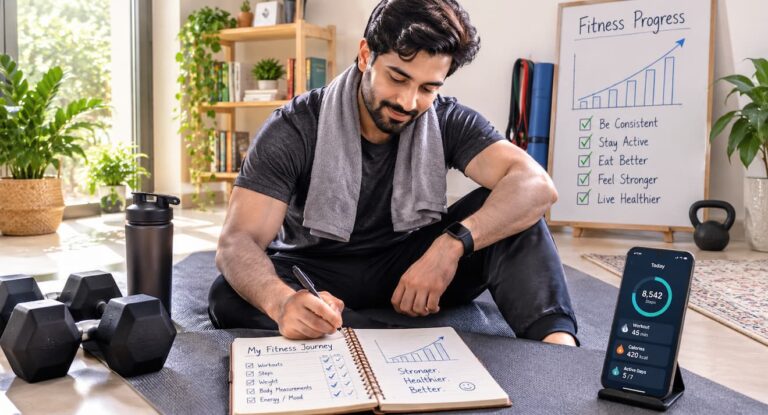
If you do not measure where you start, you cannot know what changed. I resisted tracking because it felt obsessive. But without numbers, I would have told myself I “felt a little better” and quit by day ten. The data forced me to be honest about what was actually happening.
The Exact Routine I Followed
I kept it simple because complexity was why every previous attempt had failed. Ten minutes. Same six movements. Every morning. No variation, no creativity, no decisions.
I did this on my bedroom floor immediately after turning off my alarm. No mat required. No video to follow. I set a ten-minute timer on my phone and moved through the sequence until it rang.
| Movement | Duration | Why I Chose It |
|---|---|---|
| Cat-Cow | 90 seconds | Wakes up my spine before anything else moves. The breath connection calms the morning adrenaline. |
| World’s Greatest Stretch | 2 minutes | Hits hips, hamstrings, and thoracic spine simultaneously. The most efficient use of stretching time I have found. |
| Pigeon Pose | 90 seconds each side | My hips were the tightest area. This targets external rotation where I needed it most. |
| Doorway Chest Stretch | 90 seconds | Reverses the forward hunch from typing. I use the door frame of my bathroom. |
| Standing Forward Fold | 90 seconds | Releases hamstring tension and gives my nervous system a downshift signal. |
| Neck Retractions | 60 seconds | Counteracts the forward head posture from phone use. Small movement, big difference over time. |
I did not hold any position to discomfort. I found the edge where I felt tension, backed off slightly, and breathed there. If a position felt sharp or wrong, I adjusted. This was not yoga class. This was maintenance.
What Changed by Day 7
The first week was unremarkable except for one thing: I did not skip a single day. The routine was so small that skipping it felt ridiculous. Ten minutes is shorter than my shower.
By day seven, my morning stiffness had dropped from 6.8 to 5.1. Not dramatic, but noticeable. The bigger change was psychological. I started looking forward to the routine because it felt like something I was doing for myself before the world demanded anything. That shift from obligation to self-care happened faster than I expected.
My time-to-loose metric improved from 95 minutes to 67 minutes. Still not great, but I was shaving nearly half an hour off my morning zombie phase. The shoulder wall slide test showed no improvement yet. My hips still felt like rusted hinges in the 90/90 position.
The Week One Lesson
Do not expect miracles in week one. Expect consistency. The fact that you show up every day is the entire victory. Physical changes follow behavioral consistency, not the other way around. I almost quit on day five because my hips felt the same. The data kept me going.
What Changed by Day 14
Week two is where things started getting interesting. My morning stiffness dropped to 3.4. I was waking up and feeling functional within twenty minutes. The shoulder wall slide showed improvement: my fingertips were now five inches from the wall instead of eight.
The most unexpected change was my afternoon energy. I had been rating it 4.5 at baseline. By day fourteen, it was 6.2. I was not drinking less coffee. I was just not crashing as hard. The stretching seemed to reduce the accumulated tension that was draining my energy by mid-afternoon.
My hip flexibility in the 90/90 test improved to 5.1. Still not comfortable, but no longer painful. I could sit cross-legged on the floor for the first time in years without my knees pointing toward the ceiling.
What Changed by Day 30
By the end of the month, the transformation was undeniable. Here is the complete before-and-after:
| Metric | Day 1 Baseline | Day 30 Result |
|---|---|---|
| Morning stiffness | 6.8 / 10 | 2.1 / 10 |
| Time to feel “loose” | 95 minutes | 18 minutes |
| Shoulder mobility | 8 inches from wall | 2 inches from wall |
| Hip flexibility | 3.2 / 10 comfort | 7.4 / 10 comfort |
| Afternoon energy | 4.5 / 10 | 7.1 / 10 |
The time-to-loose improvement was the most life-changing. Going from ninety-five minutes to eighteen minutes meant I was functional before my coffee finished brewing. My mornings stopped feeling like a battle and started feeling like a beginning.
The Day 30 Surprise
I did not expect my afternoon energy to improve. I started stretching for my back and hips. The energy boost was a side effect I only noticed because I was tracking it. This is why measurement matters. You cannot predict which benefits will show up. You can only notice them if you are paying attention.
What I Learned About Consistency
The biggest lesson was not about stretching technique. It was about the mechanics of habit formation. I had tried stretching before and always quit within a week. This time was different for three specific reasons.
First, the time commitment was insultingly small. Ten minutes is not a workout. It is barely a warm-up. That smallness made it impossible to argue with. I could not claim I did not have time. I spent more time scrolling Twitter on the toilet.
Second, I removed all decisions. Same six movements. Same order. Same location. No choosing from a menu of stretches. No wondering if I was doing the right thing. The routine was so boring that my brain stopped engaging with it. It just happened.
Third, I tracked data from day one. The numbers gave me feedback that subjective feeling could not. On days when I felt like nothing was changing, the spreadsheet told a different story. That objective evidence kept me going through the inevitable motivation dips.
What I Changed After 30 Days
I am now six months into daily morning stretching. The routine has evolved slightly. I added a thoracic rotation exercise because my mid-back needed more attention. I extended the world’s greatest stretch to three minutes because my hips were still the bottleneck. The total time is now twelve minutes, not ten.
But the core structure remains identical. Cat-cow still starts everything. Pigeon pose still targets my hips. The doorway chest stretch still reverses my typing posture. These movements addressed my specific problems. Your problems may be different. The principle is the same: find your tight spots, choose movements that target them, and do them every day without negotiation.
I no longer track metrics daily. I check in monthly now. My morning stiffness hovers around 2.0. My time-to-loose is under fifteen minutes. My afternoon energy stays above 7.0 without caffeine increases. The maintenance phase is easier than the building phase because the habit is automatic.
Should You Try This?
If you wake up stiff, sit all day, or feel like your body is aging faster than your calendar, yes. But start smaller than you think necessary. Five minutes is enough. Three movements is enough. The goal is not to become flexible. The goal is to become consistent. Flexibility follows consistency the way strength follows training.
Do not worry about doing it perfectly. I spent the first week wondering if my form was correct. It did not matter. The act of showing up and moving through a range of motion was enough to start the adaptation process. Perfection is the enemy of consistency. Consistency is the only thing that works.
Pick three stretches that address your worst tight spots. Set a timer. Do them every morning for thirty days. Track one metric. That is the entire protocol. Everything else is detail.
Related Articles
- How I Built a 10-Minute Morning Mobility Routine That Actually Stuck
- The Beginner Workout Mistakes That Caused Early Burnout
- Why I Stopped Trying Extreme Morning Routines
- 4 Small Morning Habits That Help Me Feel More Focused Before Work
- How I Stay Consistent on Busy Days
- Evening Wind-Down Routine That Improves Deep Sleep Naturally
Sources and References
- Page, P. (2012). “Current concepts in muscle stretching for exercise and rehabilitation.” International Journal of Sports Physical Therapy, 7(1), 109-119. https://www.ncbi.nlm.nih.gov/pmc/articles/PMC3273886/
- Lally, P., et al. (2010). “How are habits formed: Modelling habit formation in the real world.” European Journal of Social Psychology, 40(6), 998-1009.
- American College of Sports Medicine. “ACSM’s Guidelines for Exercise Testing and Prescription.” 11th Edition. Wolters Kluwer.

Abdur Rahman is a lifestyle writer focused on simple health habits and everyday wellness. He creates easy-to-understand content that helps readers improve their routines without confusion or pressure. His work covers topics like daily health habits, home fitness, simple nutrition, sleep, and stress management. He believes that small, consistent actions lead to meaningful long-term results and aims to make healthy living practical, realistic, and accessible for everyone.