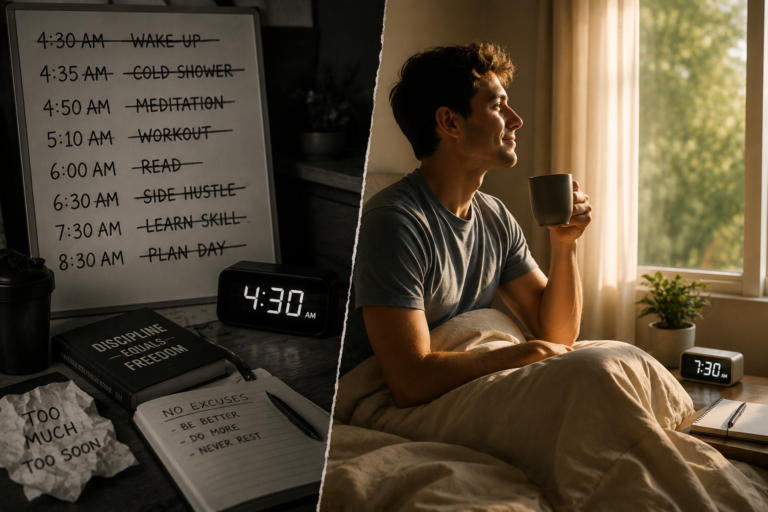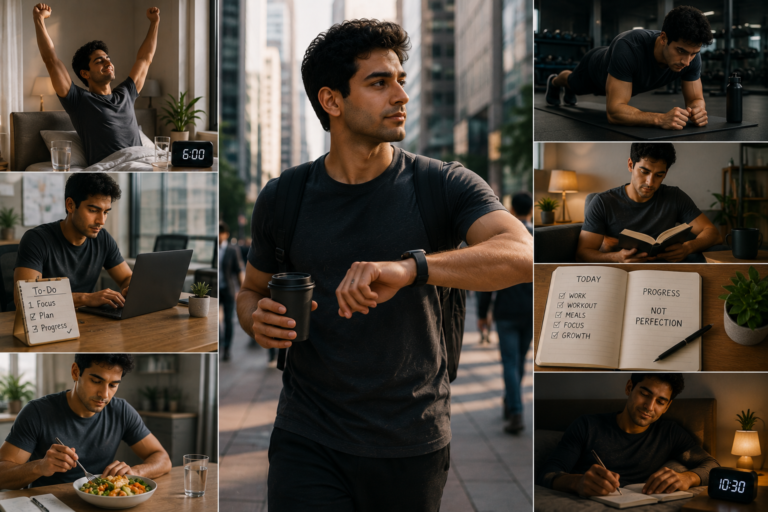
I used to track everything. Steps, calories, sleep stages, heart rate variability, water intake, screen time, meditation minutes, weight, body fat percentage, macros, micros, and mood scores. My phone held seventeen different apps, each demanding daily input. I spent more time managing my health data than actually living in a way that produced optimal health.
The irony became impossible to ignore. I was stressed about tracking my health, which elevated my cortisol levels and worsened the very metrics I was monitoring. A perfect step count couldn’t compensate for the anxiety of missing it. A green sleep score didn’t offset the blue light I exposed myself to while checking that score at 2:00 AM.
The breaking point came during a vacation. I forgot my fitness tracker and spent the first day anxious about the missing data. Not about my actual activity, which was perfectly adequate. This is about the absence of a number confirming it. That dependency felt absurd and alarming. I returned home determined to rebuild my health tracking from scratch, keeping only what genuinely served me and discarding the rest.
What emerged was a minimal system that takes less than five minutes daily but provides more useful insight than my previous seventeen-app setup. Here’s precisely what I track, why I chose it, and how I keep the process from consuming my life.
The Principle That Guided My Purge
Before I could decide what to keep, I needed a decision framework. Otherwise, I would simply replace one excessive system with a slightly smaller one.
I settled on a single question: does tracking this metric change my behavior in a meaningful way? Not does it satisfy my curiosity. Not does it provide interesting data. Does it actually lead me to do something differently that improves my health?
Steps failed this test. I walked the same amount whether I tracked or not. My job and lifestyle created natural movement patterns that didn’t need monitoring. Sleep stages failed too. While it was fascinating to learn that I spent twelve percent of the night in deep sleep, this information did not alter my actions the following day.
What passed were metrics where awareness created immediate, actionable feedback. Where the gap between current state and desired state was clear, and closing that gap required only simple adjustments. I needed tracking that functioned as a compass, not a dashboard.
The Three Metrics I Actually Track
After the purge, three metrics remained. Each serves a distinct purpose, requires minimal input, and produces clear behavioral guidance.
Energy level. Once daily, in the evening, I record a single number from one to ten. Not how I feel right now, but how my energy was throughout the day overall. This takes ten seconds and requires no device. The number itself matters less than the pattern it reveals over weeks. When my average drops below six for several consecutive days, I know something needs attention—sleep, nutrition, stress, or recovery. The metric is subjective, which is exactly its strength. Objective data like heart rate doesn’t capture how I actually experience my body. My energy score does.
Movement. I don’t count steps or log workouts. I simply note whether I moved intentionally today. A walk, a workout, a yoga session, a long bike ride—any deliberate physical activity qualifies. The tracking is binary: yes or no. This removes the comparison trap of step counts or calorie burns. The goal isn’t optimization. It’s consistency. Seeing a streak of movement days motivates continuation without the pressure of specific targets.
Sleep timing. I record what time I got into bed with the intention to sleep and what time I woke. It is not sleep quality, not duration, and not efficiency. Just the window. This reveals whether my schedule is consistent, which matters more than any single night’s performance. When my bedtime drifts later or my wake time becomes irregular, I know my circadian rhythm is destabilizing and I need to re-anchor it.
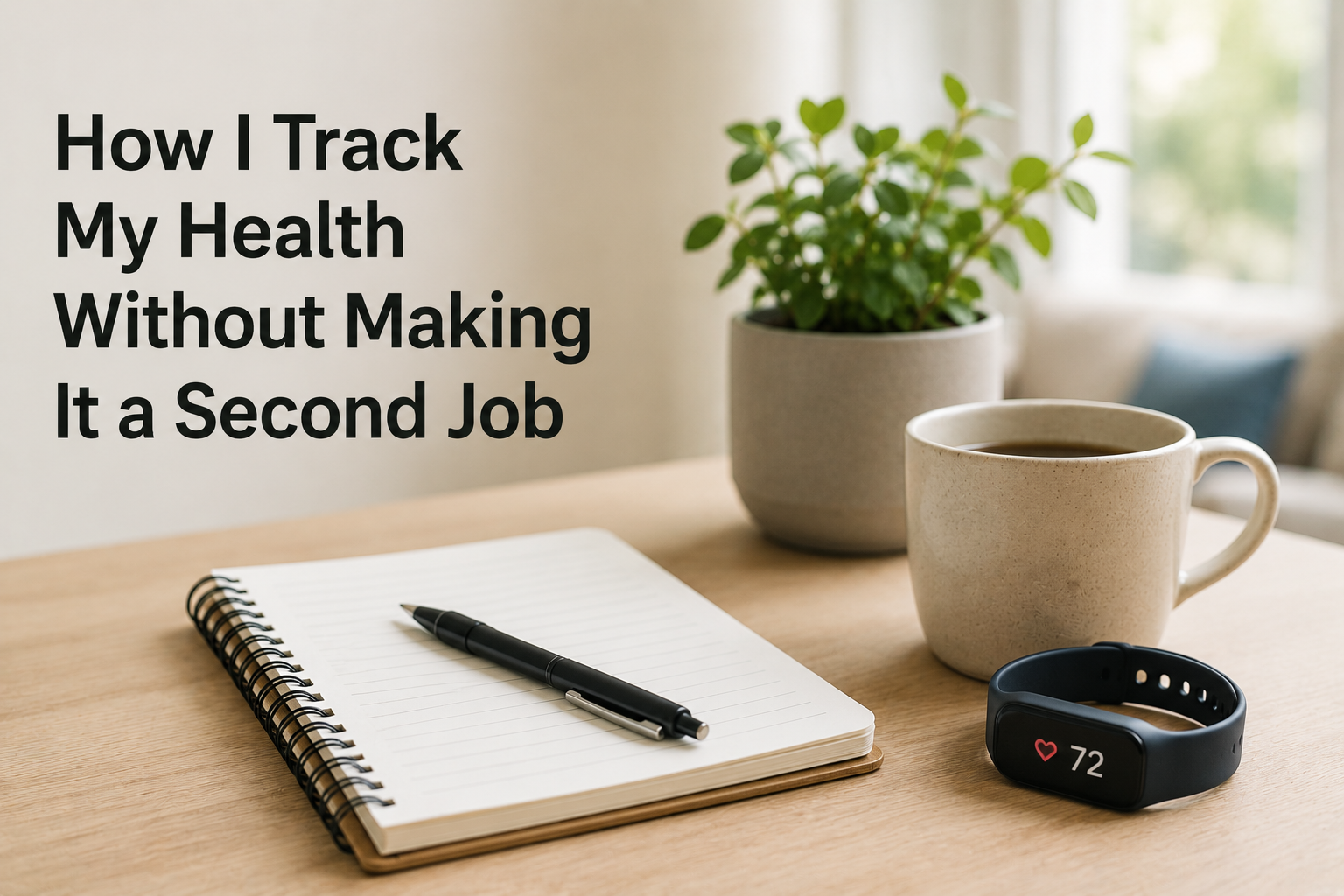
That’s it. Three data points, less than a minute total, recorded in a simple notes app that syncs across devices. No wearables, no specialized apps, no graphs or trends unless I choose to review them.
Why I Stopped Tracking Food Entirely
Food logging was the hardest habit to break. I had tracked calories, macros, and meal timing for years. The data was comprehensive and, I believed, essential for maintaining my weight. But the tracking itself created problems it couldn’t solve. I became obsessed with hitting precise targets, anxious about social meals that couldn’t be logged accurately, and disconnected from my body’s actual hunger signals. I was eating according to an app rather than according to my needs. When I stopped tracking food and shifted to simple principles—protein at each meal, vegetables at most meals, eating until satisfied not stuffed—my weight stabilized and my relationship with food improved dramatically. I wrote about this transition to eating better without strict rules in this article. The lesson generalizes: tracking should serve your health, not dominate it.
The Weekly Review That Replaces Daily Obsession
Tracking daily without reviewing weekly is data hoarding. I review my three metrics every Sunday evening, which takes about five minutes. I look for patterns, not perfection. A single low energy day means nothing. A trend of declining energy over two weeks means I need to investigate.
The review has a specific structure. First, I calculate my weekly averages for energy and sleep timing consistency. Second, I count my movement days. Third, I ask one question: what is one small adjustment I could make next week based on this data?
The adjustment is always small. Go to bed thirty minutes earlier. Add one extra movement day. Reduce a specific stressor I can identify. The goal isn’t dramatic transformation. It’s continuous gentle correction before problems accumulate.
This weekly rhythm prevents the daily obsession that previously consumed me. I don’t check my metrics multiple times per day because I know they’ll be reviewed in aggregate at week’s end. The data supports weekly decision-making rather than moment-to-moment anxiety.
What I Use Instead of Wearables
I owned a fitness tracker, a smartwatch, and a ring that measured sleep. Each provided beautiful data visualizations and occasional insights. Each also created dependency, distraction, and the subtle pressure to optimize metrics that didn’t matter.
I sold all of them. The liberation was immediate. No more charging devices, no more syncing failures, no more checking my wrist during meetings to see my stress score. My body became my primary sensor again.
I still use my phone, but minimally. The timer function for workouts. The alarm for consistent wake times. The notes app for my three metrics. These are tools I control, not devices that demand my attention with notifications and gamification.
For movement specifically, I rely on habit stacking rather than tracking. I walk after lunch because that’s when I always walk, not because an app reminds me. I do my brief morning workout because my mat is visible and my routine is automatic, not because I’m chasing a streak. The behavior has become independent of the data, which is exactly where tracking should lead.
The “Body Scan” That Replaced My Wearable
Every morning, before looking at any screen, I perform a thirty-second body scan. I notice my energy level, any areas of tension, my hunger, my mood. This practice provides more actionable information than any wearable ever did. If my shoulders are tight, I need more movement or less stress. If I’m unusually hungry, I probably under-ate yesterday. If my mood is low, I need sunlight and social connection. These observations connect me to my body’s signals rather than abstracting them into numbers. The scan takes less time than checking a sleep score and provides more relevant guidance. It also trains my interoception—my ability to sense internal states—which is a genuine health skill that technology cannot replicate. If you’re interested in building body awareness through movement, my experience starting from scratch with squats might resonate—I wrote about it here.
How I Handle Health Anxiety Without Tracking
One hidden function of my extensive tracking was anxiety management. The data provided an illusion of control. If I could measure everything, I could prevent it all. The belief was false, but it felt true, and giving it up required finding alternative ways to manage health-related worry.
I addressed this by distinguishing between tracking for optimization and tracking for reassurance. The former is useful within limits. The latter is a trap that expands indefinitely. I was using data to soothe anxiety that data cannot resolve.
Now, when health anxiety arises, I ask whether there’s a specific action I can take. If yes, I take it. If no, I practice tolerating uncertainty rather than seeking measurement to reduce it. This is harder in the moment but builds genuine resilience over time.
I also maintain regular preventive care—annual physical, dental checkups, vision exams. These provide baseline reassurance without daily monitoring. Knowing that a professional reviews my health periodically reduces the need for constant self-surveillance.
The Surprising Benefits of Tracking Less
Reducing my tracking produced benefits I hadn’t anticipated. My sleep improved because I stopped checking my sleep score in the middle of the night. The blue light and cognitive activation of reviewing data at 3:00 AM was more disruptive than any sleep stage deficiency I was measuring.
My relationship with exercise transformed. Without calorie burn targets or heart rate zones to hit, I began choosing activities I genuinely enjoyed. Some days that’s a vigorous workout. Other days it’s a leisurely walk. Both count as movement in my system, which removes the all-or-nothing thinking that previously made exercise stressful.
I became more present in social situations. I no longer interrupted meals to log food or checked my watch during conversations to see my step count. The people around me received my full attention, which strengthened my relationships and, paradoxically, my health.
Most importantly, I reclaimed mental bandwidth. The cognitive load of managing seventeen apps, interpreting conflicting data, and optimizing multiple metrics was substantial. That energy now goes toward actual living—cooking, walking, connecting, resting. The behaviors that produce health matter more than the measurement of them.
When Tracking Still Makes Sense
I’m not anti-tracking universally. Specific situations warrant detailed monitoring. If you’re training for a specific athletic event, tracking load and recovery is essential. For those managing a diagnosed medical condition, having access to objective data can be life-saving. If you’re trying to identify a specific trigger—food sensitivity, sleep disruptor, stress pattern—temporary intensive tracking provides valuable information. The key is intentionality. Track with a specific question and a planned endpoint. Don’t track indefinitely because the data is available. My own brief experiments with tracking have taught me what I need to know, and I’ve since returned to my minimal system. If you’re experimenting with your health, my approach to trying new habits without letting them consume you might help—I wrote about a 3-week experiment here.
What I Would Tell Someone Drowning in Health Data
If you’re currently managing multiple apps, wearables, and tracking systems that feel overwhelming, I encourage you to try a radical reduction. Not gradual paring down, which allows each metric to justify its existence. A complete reset.
Stop all tracking for one week. Notice what you miss and what you don’t. Notice whether your behavior changes without data. Notice whether you feel more or less anxious. This deprivation experiment reveals what actually serves you versus what you’ve simply grown accustomed to.
After the week, reintroduce only what you genuinely missed and what passes the behavior-change test. Start with one metric. Add a second only if the first proves insufficient. Most people discover they need far less than they assumed.
Remember that health is not a project to be managed. It is a state that emerges from consistent, sustainable behaviors. Tracking can support those behaviors when kept minimal and purposeful. When it becomes an end in itself, it undermines the very health it claims to serve.
My three-metric system isn’t perfect. It doesn’t capture everything that matters. But it captures enough to guide my decisions without consuming my attention. That balance is the point. Health tracking should be a small servant, not a demanding master.
My Minimal Health Tracking System
Daily (under 1 minute):
- Evening energy score (1-10) — notes app
- Movement yes/no — notes app
- Sleep timing (bedtime/wake time) — notes app
Weekly (5 minutes, Sunday evening):
- Calculate average energy score
- Assess sleep timing consistency
- Count movement days
- Identify one small adjustment for the week ahead
What I don’t track: steps, calories, macros, heart rate, sleep stages, weight, body composition, water intake, screen time, meditation minutes, mood scores, workout details, or any metric that doesn’t directly change my behavior.
Related Articles
- How I Eat Better Without Strict Dieting
- Why I Stopped Counting Calories and Started Tracking Energy Instead
- How I Cut Sugar Cravings Using a 3-Week Protein-First Experiment
- How I Stay Consistent on Busy Days
- Simple Digital Detox Habits That Work
- Signs Your Daily Routine Is Hurting Your Energy Without You Realizing It
Sources and References
- Piwek, L., et al. (2016). “The rise of consumer health wearables: Promises and barriers.” PLOS Medicine, 13(2), e1001953.
- Schüll, N. D. (2016). “Data for life: Wearable technology and the design of self-care.” BioSocieties, 11(3), 317-333.
- Crum, A. J., & Langer, E. J. (2007). “Mind-set matters: Exercise and the placebo effect.” Psychological Science, 18(2), 165-171.

Abdur Rahman is a lifestyle writer focused on simple health habits and everyday wellness. He creates easy-to-understand content that helps readers improve their routines without confusion or pressure. His work covers topics like daily health habits, home fitness, simple nutrition, sleep, and stress management. He believes that small, consistent actions lead to meaningful long-term results and aims to make healthy living practical, realistic, and accessible for everyone.