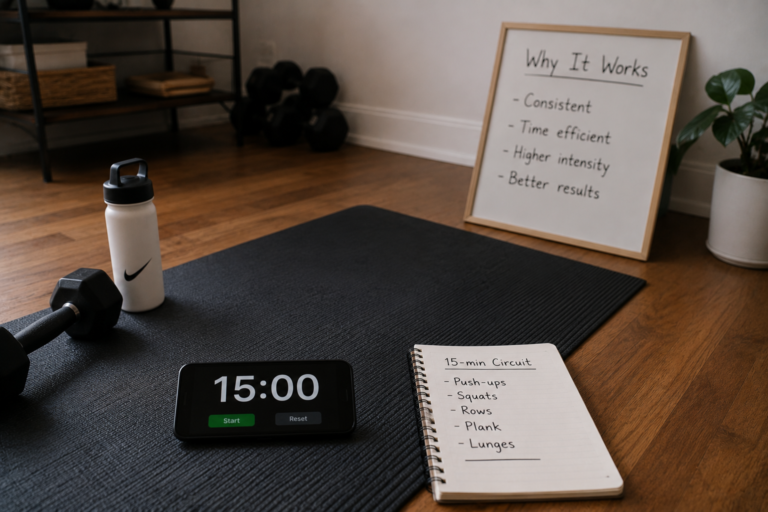
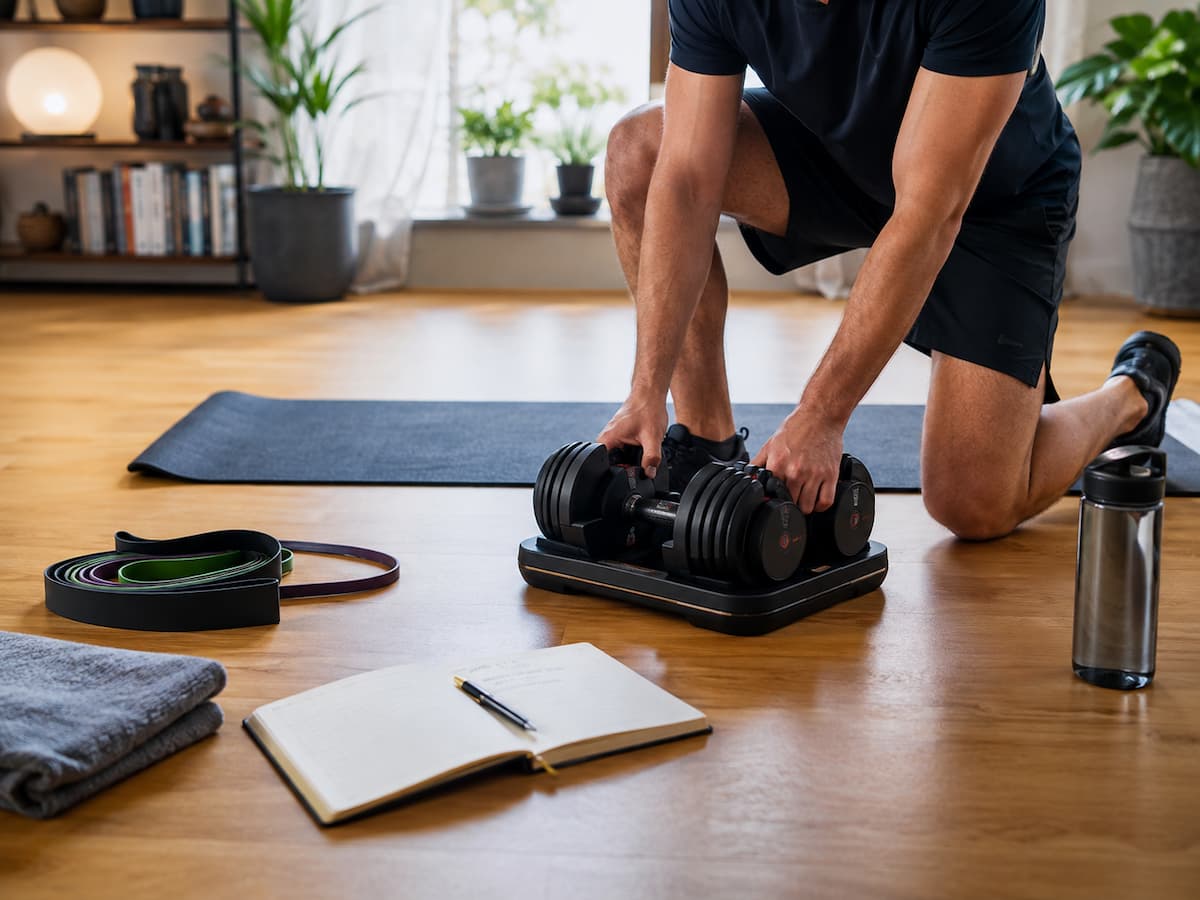
This moment can make beginners think they need entirely new equipment, a complicated training program, or a gym membership. Sometimes those changes can help, but they are not always the answer. Often, the problem is not the location of your workout. The problem is that your body has adapted to the challenge you are providing.
The human body becomes efficient at repeated movements. A workout that creates a strong stimulus in the beginning may eventually require adjustments because your strength, coordination, and endurance have improved. This is actually a positive sign. It means your body has responded to the training. The next step is not abandoning your routine but learning how to make it continue working.
Why the Same Workout Stops Producing the Same Results
When you repeat the same exercises with the same number of repetitions, the same resistance, and the same intensity for a long time, your body becomes better at handling that workload. This adaptation is one of the reasons exercise works. Your body learns, becomes stronger, and becomes more efficient. However, improvement requires a reason for the body to continue adapting.
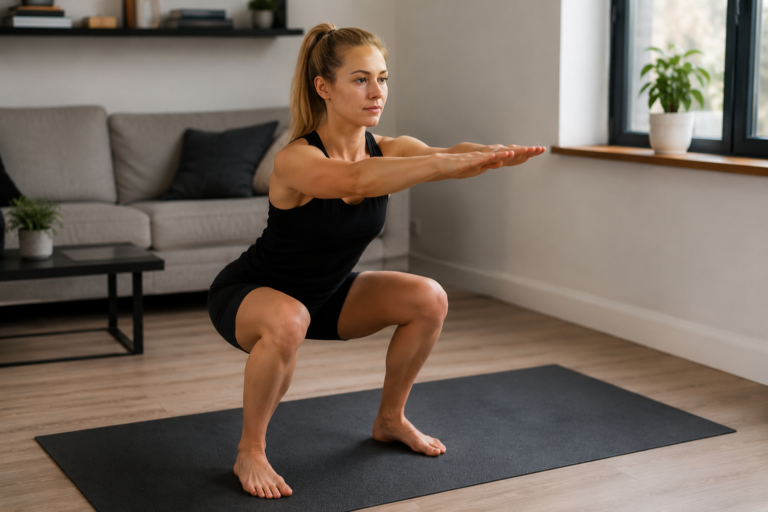
For example, someone who starts with ten bodyweight squats may find them difficult during the first weeks. After several months, those same ten squats may no longer provide enough challenge because their muscles and movement patterns have improved.
The solution is not always to do hundreds of repetitions. More is not automatically better. The goal is creating a new challenge that matches your current ability. This concept is often called progressive overload. It simply means gradually increasing the demands placed on your body so that it has a reason to keep improving.
Start by Checking Whether Your Workout Is Actually Too Easy
Before changing everything, it helps to determine whether your workout has truly stopped challenging you or whether you are simply having a temporary low-energy day. Not every workout needs to leave you exhausted. A good training session does not have to feel like a competition against yourself every time.
A workout may need adjustment if you notice consistent signs such as completing every exercise easily, finishing with much more energy than expected, no longer feeling challenged by the final repetitions, or seeing no improvement in strength or endurance over time. However, if your performance is improving and you feel stronger, the routine may still be working even if it feels easier.
Increase Difficulty Before Adding More Workout Time
A common reaction when workouts become easy is simply lengthening them. Someone who normally exercises for twenty minutes may decide to train for an hour instead. Longer workouts can be useful, but they are not always the most efficient solution. If the main problem is that your muscles are no longer challenged enough, increasing duration may only create more fatigue without creating better results.
A smarter approach is often improving the quality of the challenge. For example, instead of adding another thirty minutes of basic exercises, you might slow down your repetitions, increase resistance, reduce rest time, or choose a more difficult variation. The goal is making your existing workout more demanding rather than simply lengthening it.
Use Progressive Overload Without Complicating Your Routine
Many people hear the phrase “progressive overload” and assume it requires advanced programming. For home workouts, it can be much simpler. Progressive overload is about gradually asking more from your body. The change can be small, but it needs to create a new challenge.
| Current Training | Possible Progression |
|---|---|
| 10 push-ups | Increase repetitions or move to a harder variation. |
| Bodyweight squats | Add resistance or use slower, controlled movements |
| Light dumbbells | Increase weight gradually. |
| Short workout sessions | Add another training set. |
| Same routine every week | Introduce new movement challenges. |
The important part is changing one factor at a time. If you increase everything at once, it becomes harder to know what is helping and easier to create unnecessary fatigue.
Your Equipment May Not Be the Problem
Many people believe their workouts stop working because they do not own enough equipment. This is especially common with home training because there are fewer visible signs of progression compared with a commercial gym. However, equipment is only one way to increase difficulty.
A simple pair of dumbbells, resistance bands, or even bodyweight exercises can provide years of progression when used correctly. The same exercise can become much harder by changing technique. A slower movement, improved range of motion, controlled pauses, or a more demanding variation can create a different training effect without buying anything new.
Before purchasing more equipment, evaluate whether you have fully explored what your current tools can do. Many beginners own enough equipment but have not yet learned how to use it strategically.
Change Exercises Without Constantly Chasing New Workouts
There is a balance between repeating exercises long enough to improve and changing them so often that progress becomes difficult to measure. Some people switch workouts every week because they believe variety automatically creates better results. The problem is that constant change can prevent them from becoming stronger at any specific movement.
Your body needs repetition to develop skill and strength. At the same time, performing the exact same routine forever can become limiting. A practical approach is keeping important movement patterns while occasionally changing the challenge.
For example, you may continue training squats, pushes, pulls, and core exercises while adjusting the variation, resistance, or intensity over time. This keeps your routine familiar enough to track progress but different enough to continue creating adaptation.
Focus on Improving Exercise Quality
When workouts become easier, many people immediately increase repetitions without checking their technique. This can create a habit of performing more work without improving movement quality. Better technique can make an exercise more challenging because the intended muscles are working more effectively. For example, a controlled push-up with proper body alignment is very different from quickly completing more repetitions with poor form. The number may look higher, but the training effect may be lower.
Improving exercise quality can include:
- Moving through a fuller range of motion.
- Controlling the speed of each repetition.
- Maintaining proper posture.
- Using the correct muscles instead of relying on momentum.
- Creating better control during difficult parts of the movement.
Sometimes the next level of progress is not about doing more. It is doing the same movement better.
Know When Your Body Needs Recovery Instead of More Intensity
When workouts stop feeling challenging, some people respond by increasing difficulty immediately. This can be a mistake if the real issue is fatigue. A body that is not recovering properly may feel weaker, less motivated, and less responsive during training.
Recovery affects how well you perform. Poor sleep, stress, insufficient rest days, and excessive training can make workouts feel harder in the wrong way. The difference is important. A productive challenge should make you work harder while still allowing you to recover and improve. Constant exhaustion is not the same thing as effective training. Before increasing intensity, consider whether your current routine is balanced enough to support the extra demand.
Use Your Goals to Decide What Should Change
The right adjustment depends on what you are trying to achieve. A person training for muscle growth may need different changes compared with someone focused on endurance, general fitness, or weight management.
For strength goals, increasing resistance or choosing harder variations may be useful. For endurance goals, increasing work capacity or reducing rest periods may make more sense.
This is why copying someone else’s workout progression can be misleading. Your routine should respond to your progress, schedule, and goals. A workout becoming easier is not automatically a problem. It becomes a problem when your training no longer matches what you want to improve.
Small Changes That Can Restart Progress
You do not need to completely rebuild your home workout routine every time progress slows. Often, small adjustments are enough to create a new challenge.
- Add a small amount of resistance.
- Increase repetitions gradually.
- Improve exercise technique.
- Try a harder variation.
- Adjust rest periods.
- Add another set.
- Change the order of exercises.
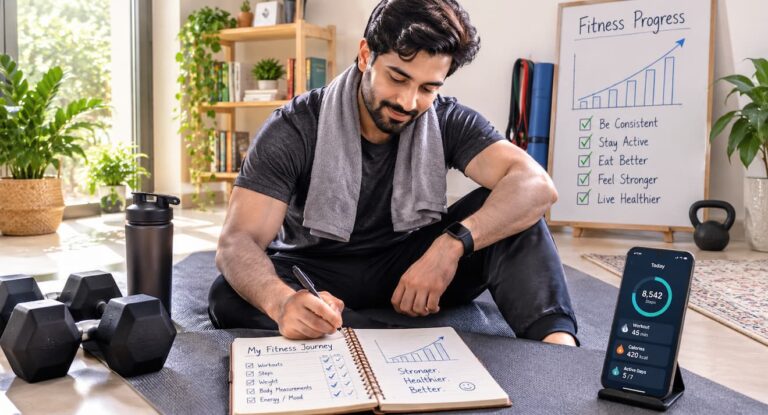
- Track your workouts to notice improvements.
The best changes are usually the ones you can maintain. A dramatic routine change may feel exciting for a few weeks, but a small improvement that fits your lifestyle is more likely to produce long-term progress.
The Goal Is Not to Make Every Workout Exhausting
While a productive workout should push you, it should also get you ready to train again in the future. Making progress takes a lot of work over time. It’s harder to stay consistent if every session makes you too exhausted to recover properly. Increasing the level of challenge is not meant to make exercise miserable. It’s about providing the right level of challenge so that people can continue to improve.
Build a Home Workout Routine That Grows With You
The best way to work out at home isn’t one that stays the same all the time. It changes as you get stronger and more experienced. At first, just doing easy moves is enough. You might need more resistance, harder versions, better programming, or extra gear in the future.
Make changes based on how far you’ve come instead of making adjustments all the time because you’re bored. It’s not a sign that home training has failed when a workout stops being challenging. It means that the way you’ve been doing things has worked for now, and it’s time to change your routine up. For growth to happen, new tasks need to be brought up, but they should be done with care.
FAQs
1. How often should I switch up the way I work out at home?
You don’t have to change your habit all the time. A lot of people can make progress for a few weeks or months by making things a little harder each time, until they need to make big changes.
2. Does it matter if a workout feels easier?
Yes. If your workouts are getting easier, it could mean that you are fitter. The main question is whether you are still making progress toward your goals.
3. When it gets easier to work out at home, do I need more gear?
Not all the time. Usually, you can make new challenges without getting new tools by adding more resistance, improving your technique, changing the types of exercises you do, and adjusting the intensity.
4. Why am I not getting stronger even though I work out every day?
One usual reason is not making progress. If you always do the same workouts, your body might not have a reason to change. Your results also depend on how well you recover, eat, and exercise.
5. Should all of your workouts be hard?
No, different amounts of effort are needed for effective training. You should be challenged in some sessions and helped with recovery, technique, or consistency in others.

Abdur Rahman is a lifestyle writer focused on simple health habits and everyday wellness. He creates easy-to-understand content that helps readers improve their routines without confusion or pressure. His work covers topics like daily health habits, home fitness, simple nutrition, sleep, and stress management. He believes that small, consistent actions lead to meaningful long-term results and aims to make healthy living practical, realistic, and accessible for everyone.