Why Tracking Home Fitness Progress Matters
Many people begin exercising with motivation but stop after a few weeks because they cannot see noticeable results. Tracking helps solve this problem by showing small improvements that are easy to miss. For example, you may not notice that you can perform five more push-ups than last month or that you recover faster after a workout. These improvements are real progress, even if your body weight has not changed.
Benefits of tracking your fitness journey
- Helps you understand what exercises work best for you
- Keeps you motivated during slow periods
- Makes it easier to adjust your workout plan
- Shows improvements beyond weight loss
- Creates accountability and consistency
Tip: The best tracking system is not the most complicated one. It is the one you can follow consistently.
Set Clear Fitness Goals Before Tracking
Before measuring progress, you need to know what you are trying to achieve. Different goals require different tracking methods. Someone trying to build muscle will track different things compared to someone training for better mobility or general health.
| Fitness Goal | What to Track |
|---|---|
| Weight Loss | Body weight, measurements, daily activity, nutrition habits |
| Muscle Building | Strength levels, repetitions, resistance, body measurements |
| Better Endurance | Workout duration, heart rate, recovery time |
| Flexibility | Range of motion, stretching progress, mobility tests |
Make goals specific.
A goal like “I want to get fit” is difficult to measure. A better goal would be “I want to complete three home workouts every week for the next three months” or “I want to increase my plank time from 30 seconds to two minutes.” Clear goals make tracking easier because you know exactly what success looks like.
Create a Simple Workout Tracking System
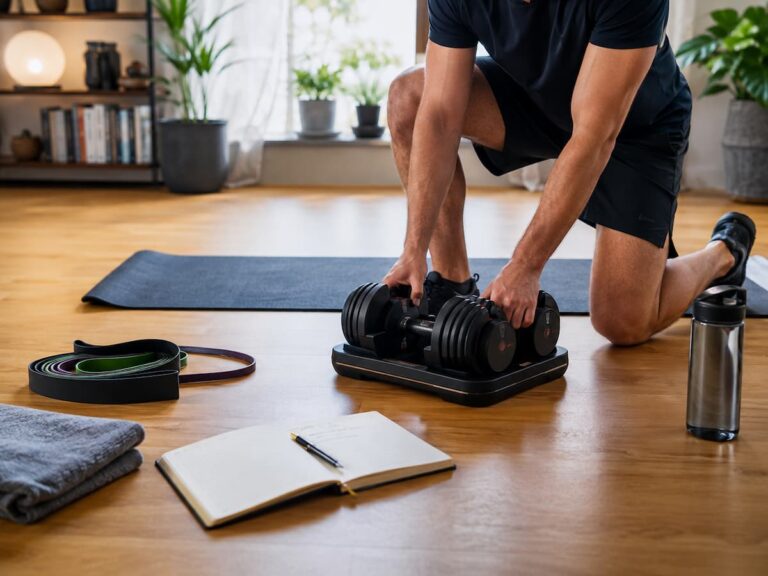
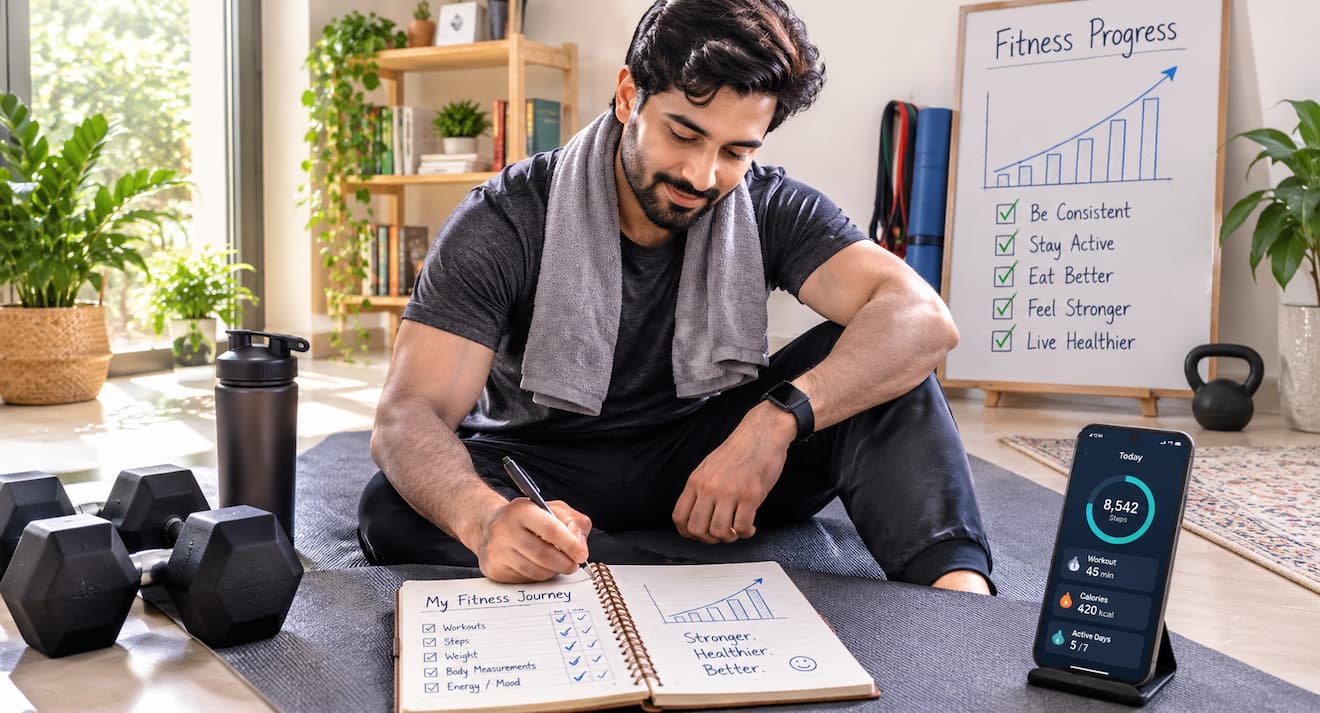
A workout log is one of the most useful tools for monitoring fitness progress. Professional athletes and trainers use records because memory alone is not reliable. You do not need a special notebook or expensive application. A simple spreadsheet, fitness app, or paper journal can work.
What to record after each workout
- Date of workout
- Exercises completed
- Number of sets and repetitions
- Workout duration
- Difficulty level
- How you felt before and after exercising
Example:
| Date | Exercise | Progress |
|---|---|---|
| Monday | Squats | 3 sets of 15 repetitions |
| Wednesday | Push-ups | Improved from 10 to 15 repetitions |
Why workout logs help
A workout record allows you to see patterns. You may discover that your strength improves when you sleep well or that certain exercises cause discomfort. This information helps you make better choices.
Track Body Measurements Correctly
Many beginners rely solely on body weight to measure fitness progress. While weight can provide useful information, it does not tell the complete story. Your body composition can change even when your weight stays similar. For example, you may lose fat while gaining muscle.
Useful measurements to track
- Waist circumference
- Hip measurement
- Chest measurement
- Arm measurement
- Leg measurement
- Body weight
Measure your body under similar conditions each time. For example, take measurements in the morning before eating and use the same measuring method.
Measure Strength and Performance Improvements
One of the clearest signs of fitness progress is improved performance. If your body becomes stronger, you will usually notice that daily activities and workouts become easier.
Examples of performance tracking
- How many push-ups can you complete?
- How long can you hold a plank?
- How many squats can you perform?
- Can you exercise longer without feeling exhausted?
- Are you using more resistance than before?
Performance tracking is especially valuable for home workouts because you may not have access to gym machines that show progress automatically.
Progressive improvement
A key fitness principle is gradually increasing difficulty. This may mean adding repetitions, increasing workout time, improving technique, or using additional resistance. Small improvements over time create meaningful long-term results.
Use Progress Photos Effectively
Progress photos are one of the easiest ways to visually track fitness changes. Many physical improvements happen slowly, and it can be difficult to notice changes when you look at yourself every day. A monthly photo comparison can reveal improvements in posture, muscle definition, body shape, and overall appearance that numbers may not show.
How to take useful progress photos
- Take photos at the same time of day
- Use similar lighting conditions
- Wear similar clothing each time
- Use the same camera angle and distance
- Relax your body instead of posing differently
| Good Practice | Mistake to Avoid |
|---|---|
| Take photos every 4–6 weeks. | Taking photos multiple times every day |
| Compare photos over longer periods | Judging results after only a few days |
| Use photos with measurements and performance data. | Relying only on appearance |
Remember that progress photos are a tool for understanding your journey, not a reason to criticize yourself. Fitness improvement happens at different speeds for everyone.
Important Fitness Metrics to Monitor
Tracking a few important measurements can give you a complete picture of your fitness progress. However, tracking too many things can become overwhelming. Choose metrics that match your goals and lifestyle.
Key fitness metrics
| Metric | What It Shows | How Often to Track |
|---|---|---|
| Body Weight | Changes in overall body mass | Weekly |
| Workout Performance | Strength and endurance improvements | Every workout |
| Body Measurements | Physical changes in different areas | Monthly |
| Energy Levels | How your body responds to exercise | Daily |
| Sleep Quality | Recovery and readiness | Daily |
Do not ignore non-physical progress.
Fitness is not only about appearance. Improvements in mood, confidence, concentration, and daily energy are also valuable results. Someone who can walk longer, climb stairs more easily, or complete household tasks without fatigue is making meaningful progress.
Common Fitness Tracking Mistakes
Tracking progress is helpful, but doing it incorrectly can create frustration. Many beginners make simple mistakes that affect motivation.
1. Checking results too frequently
The human body changes gradually. Checking your weight or appearance every day can create unnecessary stress because natural changes in water, food intake, and sleep can affect results.
2. Focusing only on weight
Weight is only one measurement. A person can become stronger and healthier without seeing a major change on the scale.
3. Comparing yourself with others
Everyone has different genetics, schedules, fitness backgrounds, and lifestyles. Your progress should be compared with your previous performance, not someone else’s results.
4. Changing your workout plan too quickly
Some people change routines every week because they expect instant results. A consistent plan followed for several weeks provides much better information.
Best Practice: Give your fitness routine enough time before deciding whether it works.
Useful Tools for Tracking Progress
Technology can make fitness tracking easier, but you do not need advanced equipment. Choose tools that fit your routine.
Simple tracking options
- Notebook: Great for writing workout details quickly.
- Spreadsheet: Useful for organizing long-term progress data.
- Fitness apps: Helpful for reminders and workout history.
- Smart watches: Can monitor activity, heart rate, and workouts.
| Tool | Best For | Difficulty Level |
|---|---|---|
| Paper Journal | Simple workout records | Beginner |
| Spreadsheet | Detailed tracking | Beginner to Intermediate |
| Fitness App | Automated tracking | Beginner |
| Wearable Device | Advanced activity data | Intermediate |
Do not let tracking become stressful.
The purpose of tracking is to make fitness easier, not create extra pressure. If recording every detail feels overwhelming, simplify your system.
How to Stay Consistent With Tracking
The biggest challenge in home fitness is often not knowing what to do. It is staying consistent long enough to see results. A good tracking system helps create accountability and keeps you focused during times when motivation is lower.
Practical ways to stay consistent
- Choose a fixed day for reviewing progress
- Keep your workout records in one place
- Celebrate small improvements
- Set realistic goals
- Adjust your routine when necessary
Create a weekly fitness review.
Spend a few minutes each week reviewing your progress. Ask yourself:
- Did I complete my planned workouts?
- What improved this week?
- What challenges affected my routine?
- What can I improve next week?
This simple habit helps you make better decisions instead of randomly changing your fitness plan.
Building a Professional-Level Home Fitness Tracking Routine
Tracking like a professional does not mean creating complicated spreadsheets or recording every small detail. Professionals track information because it helps them make better decisions.
A beginner-friendly professional system can include the following:
- Define your main fitness goal
- Record every workout
- Measure important physical changes
- Review progress regularly
- Adjust your routine based on results
Example weekly tracking routine
| Day | Tracking Activity |
|---|---|
| Monday | Record workout performance |
| Wednesday | Review energy and recovery. |
| Friday | Compare exercise improvements. |
| Sunday | Plan next week’s workouts. |
This approach keeps your fitness journey organized without making it complicated.
Conclusion
Tracking your home fitness progress is one of the simplest ways to stay motivated and make smarter decisions about your workouts. You do not need expensive equipment or complicated systems to understand whether you are improving. A good tracking routine focuses on the things that truly matter: workout performance, body measurements, energy levels, consistency, and personal improvements. Small changes, such as completing more repetitions or recovering faster, are important signs of progress.
The biggest mistake many beginners make is expecting immediate results and ignoring gradual improvements. Fitness is a long-term process, and tracking helps you recognize the progress happening along the way. Start with a simple system. Record your workouts, review your progress regularly, and adjust your routine when needed. Over time, these small habits will help you build a stronger, healthier, and more confident version of yourself.

Abdur Rahman is a lifestyle writer focused on simple health habits and everyday wellness. He creates easy-to-understand content that helps readers improve their routines without confusion or pressure. His work covers topics like daily health habits, home fitness, simple nutrition, sleep, and stress management. He believes that small, consistent actions lead to meaningful long-term results and aims to make healthy living practical, realistic, and accessible for everyone.