The Mistake of Treating Rest Days as Lost Progress
Many beginners believe that progress only happens when they are actively exercising. This mindset creates the idea that taking a rest day means slowing down or losing momentum. In reality, recovery is when the body adapts to training. Exercise creates a challenge. Recovery allows the body to repair, adjust, and become better prepared for the next challenge.
Skipping rest days can create a situation where someone is constantly training but rarely improving. The body does not have enough time to recover from the stress of constant training. This does not mean beginners need long breaks after every workout. It means training needs a rhythm that allows effort and recovery to work together.
A healthy beginner routine usually includes:
- Days focused on exercise.
- Days with lighter activity or movement.
- Enough sleep to support recovery.
- Time between intense sessions targeting the same muscles.
- Adjustments when fatigue starts building.
Rest is not something that happens when training fails. It is one of the things that makes training sustainable.
Ignoring Small Signs Before They Become Bigger Problems
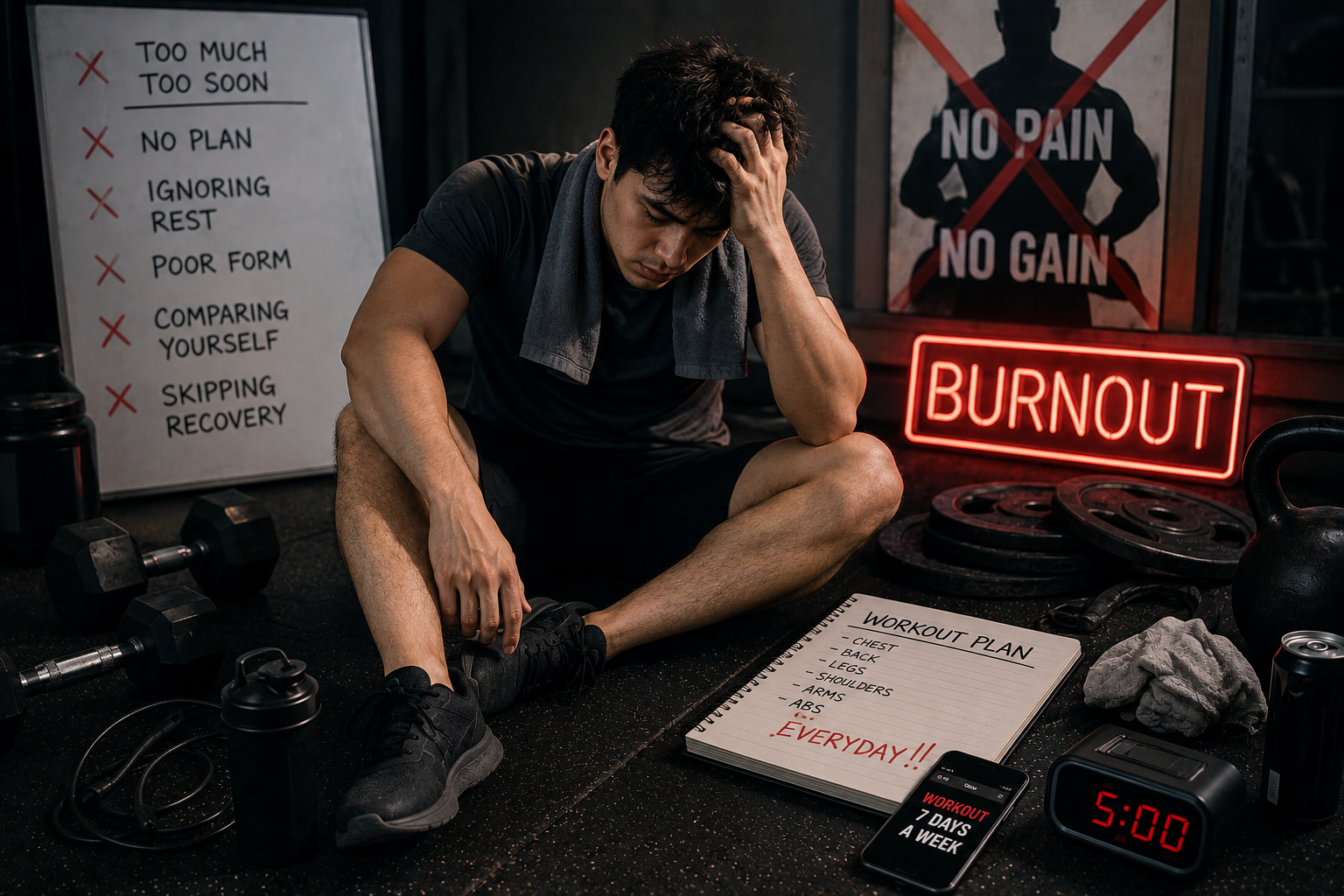
Early burnout usually develops gradually. The body usually sends smaller signals first. Beginners often ignore these signs because they assume discomfort is simply part of becoming fitter.
Some tiredness after exercise is normal. A challenging workout should require effort. The problem appears when recovery between workouts becomes incomplete and fatigue continues accumulating. Signs that recovery may need attention include:
- Feeling unusually tired before workouts.
- Lower performance despite consistent effort.
- I am losing interest in training sessions.
- Persistent muscle soreness that does not improve.
- I need more motivation to complete my normal workouts.
- I feel mentally exhausted by the routine.
These signals are not a reason to quit. They are information. A beginner routine should be adjusted before frustration turns into complete burnout. Many people assume that the answer is pushing harder. Occasionally the better solution is reducing unnecessary stress and allowing the body to catch up.
Why More Workouts Do Not Always Mean Faster Results
One of the most common beginner mistakes is believing that increasing workout frequency automatically increases progress. It seems logical: more training should create more improvement. However, exercise is not only about the amount of work completed. The body needs enough recovery to respond to that work.
For example, someone who trains strength exercises intensely every day may not allow their muscles enough time to recover. Their workouts may become less effective because they are repeatedly training while tired.
A person who trains fewer days per week but performs those sessions with better energy, focus, and consistency may achieve better long-term progress. The goal is to do a reasonable amount of exercise. The goal is to identify how much training you can maintain for months and years. Consistency comes from a routine that fits your life, not from a routine that requires constant recovery from exhaustion.
The Problem With Copying Advanced Workout Routines
Another mistake beginners make is following programs designed for people with entirely different training backgrounds. A workout routine that works well for an experienced athlete may not be appropriate for someone who is just building basic fitness.
Advanced programs often assume that the person already has movement experience, recovery habits, and knowledge of how to manage training intensity. A beginner copying a demanding routine may experience unnecessary fatigue because their body is not prepared for that level of stress. The better approach is starting with a routine that matches your current ability.
A beginner-friendly approach usually focuses on:
- Learning correct movement patterns.
- Building consistency before increasing difficulty.
- Gradually adding more challenge.
- Improving recovery habits alongside training.
- Understanding personal limits.
Progress is not measured by how difficult your first workout feels. It is measured by whether you can continue improving over time.
Sleep Was the Recovery Tool I Underestimated
Many beginners focus heavily on workouts and nutrition while treating sleep as something separate. They track exercises, count repetitions, and plan meals but ignore the hours they spend recovering each night. Sleep affects how the body handles training stress. Poor sleep can make workouts feel harder, reduce energy, and make it more difficult to maintain a consistent routine.
A beginner who trains hard but regularly sleeps poorly may feel like they are failing because their progress slows. In reality, the problem may not be the workout plan. The body may simply not be recovering properly. Improving sleep does not require creating a perfect routine overnight. Small changes can help, such as keeping a consistent bedtime, reducing distractions before sleep, and creating a better environment for rest. Recovery is not only about what happens after a workout. It is also about what happens during the hours when your body is rebuilding.
Eating Too Little Can Make Training Feel Impossible
Some beginners try to combine intense workouts with aggressive dieting because they want faster physical changes. This can create a situation where the body is receiving more stress while having fewer resources to recover. Nutrition needs vary from person to person, but extreme restriction can make workouts feel much harder. Low energy can affect motivation, performance, and the ability to maintain a consistent routine.
A sustainable approach usually focuses on building better eating habits rather than making sudden changes that are difficult to maintain. Food supports training. It is not something that works against exercise. When beginners view nutrition only as a way to reduce numbers on a scale, they may overlook its role in providing energy and supporting recovery.
Turning Every Workout Into a Test Creates Mental Burnout
Physical burnout is only part of the problem. Beginners can also become mentally exhausted when every workout feels like a challenge they must defeat. If every session requires maximum effort, there is constant pressure to perform better than the previous workout. This mindset can make normal training feel like a series of failures.
Not every workout has to be the hardest one you’ve ever completed. Some sessions should focus on improving technique. Some should feel easier. Some should simply maintain consistency during busy periods of life. A sustainable fitness routine includes different levels of effort. This allows you to continue training even when energy, schedule, or circumstances change.
How Beginners Can Build Recovery Into Their Routine
Recovery works best when it is planned rather than treated as something that happens only when exhaustion appears.
A beginner does not need a complicated system. The focus should be on creating habits that support regular training.
- Schedule rest days before fatigue forces you to stop.
- Increase workout difficulty gradually.
- Pay attention to changes in energy and motivation.
- Keep workouts realistic for your current lifestyle.
- Prioritize sleep as part of training.
- Adjust your routine when recovery becomes difficult.
The purpose of these habits is not to make workouts easier forever. The purpose is to create a foundation that allows you to handle harder training later. A person who learns recovery early is more likely to continue improving because they understand how to manage effort instead of constantly fighting fatigue.
The Difference Between Being Tired and Being Burned Out
How to Create a Workout Routine You Will Stick With
The key takeaway from early workout burnout is that motivation does not equal consistency. This is about building a regimen that respects your body, your time, and your current fitness level. Beginners often think they need to add more workouts, intensity, equipment, and effort. Sometimes the better improvement is to remove unneeded pressure.
A sustainable schedule includes difficult workouts but also rest, flexibility, and patience. This is not about showing how hard you can train for a couple of weeks. The goal is to create a system that you can keep improving over months and years. Recovery is not the antithesis of development. It’s the process that allows progress to continue.
FAQs
1. How Many Rest Days Should a Beginner Get?
How many takeu should do depends on the workout, your fitness level, and your recovery. Many novices may find it helpful to schedule in recovery days each week, particularly when starting a new regimen or increasing exercise volume.
2. Is soreness an indication of a good workout?
A good workout might make you sore. This is especially true if you are new to exercising. But it is not the only sign of a successful workout. You improve better by training often, doing it right, and getting a little bit better.
3. Why do I lose interest as soon as I start exercising?
When a routine needs more energy than a person truly has, motivation can suffer. If you don’t allow for proper recovery, set unrealistic goals, and train too intensely, exercise might feel more draining than fulfilling.
4. Should new people work out every day?
It’s beneficial to move every day, but not everyone needs to do rigorous workouts every day, especially if you are just starting out. Exercise, rest, and lighter activity should be a part of a balanced schedule.
5. How to Avoid Workout Burnout?
Take things slowly, give yourself time to recover, get quality sleep, adapt your expectations, and build a schedule that works for your life. It is constancy, not tremendous effort, that leads to long-term improvement.

Abdur Rahman is a lifestyle writer focused on simple health habits and everyday wellness. He creates easy-to-understand content that helps readers improve their routines without confusion or pressure. His work covers topics like daily health habits, home fitness, simple nutrition, sleep, and stress management. He believes that small, consistent actions lead to meaningful long-term results and aims to make healthy living practical, realistic, and accessible for everyone.